Thursday, October 16, 2008

Quinta do Lago

Most visiting birders to the Algarve will be aware of the presence of the lagoon at the edge of the São Lourenço golf course on the Qta do Lago development. The 'orrible (and way out of date) "Gosney Guide" gives directions as to how to find this 'little gem' amidst the disgusting opulence of this up-market estate (all of the many traffic round-abouts play piped music, and the mobile telecommunications masts have been diguised as trees!!).

No matter, this quite large lagoon with its numerous reedbeds is well maintained and, being at the edge of the Ria Formosa natural park attracts a large number of resident and migrant birds. There has been a raised hide there for many years but this fell into dis-repair but has now been replaced by a super (and very well constructed) two tier hide. Well worth a visit - you will meet many of the "upper crust" but in fact most of them are very nice people and always worth talking to and explaining your birding hobby.

One good thing from the point of view of photography is that many birds are very used to human presence (I have watched golfers "shooing-off" Purple Swamp Hens from the greens in the early morning so that they can proceed with their game).

Rarities and scarcities do turn up here (seven Black-crowned Night Heron this summer, almost certainly breeding), and in September an adult and juvenile Little Crake (Porzana parva) were found. I spent two mornings there trying to photograph these birds - it is on the "Rarities" list in Portugal and would be a "lifer" for me. I did manage to see the adult bird but it was feeding within the reed beds and photographs were impossible; the Portuguese name for this species is Franga-d'água-bastarda, and certainly was being a real "bastarda" for not coming out into the open which it apparently had the day before!

A consolation prize was being able to photograph a female Little Bittern (Ixobrychus minutus); I counted at least eight birds, adult males, females and juveniles (this species also breeds here), but this bird landed in a reedbed just in front of the hide and then emerged to feed on the abundant dragonflies.


Female Little Bittern (Ixobrychus minutus)

(click on photos for larger images)

Salgados Appeal

Good news and bad news!!

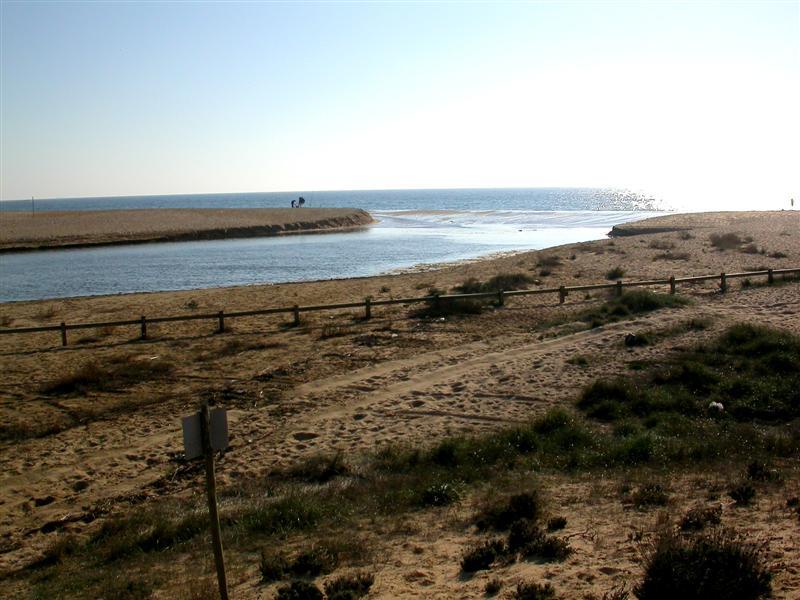
First the bad: the lagoon has again been drained in late September and remains dry. Despite rumours to the contrary, it does look like this was a natural event due to very heavy rain over-filling the lagoon combined with high tides and strong southerly winds. The retaining sand bar simply gave way and resulting outflow has destroyed it completely. Aguas Algarve are currently laying underground pipes from the new Etar (sewage treatment works) to discharge primary treated water directly into the sea; they might take advantage of the recent drainage to dig the proposed conduit across the bed of the lagoon to bury this pipe.

A few birds remain in the puddles and damp reed beds at the southern edge of the lagoon. Of note have been eight Bald Ibis (Geronticus eremita), all ringed and radio-tagged and presumed to be from the reintroduction programme in Spain and driven west by the horrendous easterly gales and torrential rain which southern Spain has experienced recently. Of a more "natural" occurrence is a sub-adult Spotted Crake (Porzana porzana) which is still present and showing well at the edge of the juncus vegetation 200 metres west of the hide:


Spotted Crake

(click on photos for larger image)

The good news: I received an interim update from José Tavares very recently saying that "they" (I presume he means RSPB and SPEA) have agreed to pay for a future supply of tertiary treated water from Aguas Algarve which will keep the lagoon "topped up" during the summer months. This is great news since without this supply (and there has been much debate on who, if anyone, was going to pay for it) the lagoon would simply disappear. He also said that further urgent talks are going on with ICNB (the government environmental department) regarding SPA status for this site. More information will come in an official bulletin in due course.

On the 26th October José is going to run in the Istanbul Intercontinental Marathon and is asking for sponsorship to raise money for an engineering project to build a manageable sluice-gate at the outflow point of the lagoon so that in future the water level can be more accurately controlled. This will negate the current "all or nothing" method where the sandbar is mechanically breached (as happened several times during the breeding season this year) and the lagoon runs dry.

*If you have enjoyed visiting Salgados in the past and want to help retain it for the future please consider making an on-line donation:

http://www.justgiving.com/josetavares-rspb-salgados

Many thanks to all, and especially to José for this enormous personal effort.

Colin

Saturday, September 06, 2008

Lagoa dos Salgados update September 2008

The following long-awaited update from Jose Tavares (RSPB) was released on 4th September. It was distributed via email as a Wordpad Document, so my apologies for the format - I am simply "copying & pasting" what I received.

Given the hints recently that there was going to be some "good news" I find the content very disappointing. There appears to be little or no progress on the conferal of SPA status on this site, and no mention of the discussions which have been taking place with Aguas Algarve about suppling the lagoon with water from the new ETAR (sewage treatment plant). I am left with the feeling that we are no further forward than we were twelve months or more ago.

The final part of the update requesting donations (of "several hundred pounds" per person!!) to raise £20,000 to fund a full-time officer seems rather an admission of defeat that with current RSPB/SPEA staffing they are unable to effectively win this campaign.


Lagoa dos Salgados – Situation Update (September 2008)

This briefing follows the one from last March, and aims to summarise the latest developments with the efforts being undertaken by Sociedade Portuguesa para o Estudo das Aves (SPEA – BirdLife in Portugal) and the Royal Society for the Protection of Birds (RSPB – BirdLife in the UK) to secure the long-term conservation of the Lagoa dos Salgados, an unprotected Important Bird Area (IBA) in the Algarve Coast.

The last few months have witnessed a roller coaster of events and advocacy actions – unfortunately the wetland opened to the sea three times in the last few months (April, July and August), and almost every other week there were actions, news, and rumours on the efforts being undertaken to secure the legal protection of the site

Protection of the site as a Special Protected Area (SPA) under the Birds Directive

As you all know, the first and immediate objective of our advocacy campaign is to protect the Salgados wetland as a SPA. During the last few months both SPEA and the RSPB have been rather active to try to secure this designation - the first step, albeit a significant one, on the effective protection and management of the lagoon. Here is the chronology of events and actions that happened in the last few months:

During March-April, SPEA and RSPB staff heavily lobbied the Portuguese ministry of environment for the designation of the site as an SPA. Meetings were held, documents submitted, lots of emails exchanged. We finally secured from the deputy minister of environment a positive opinion, and indeed a request on these lines was sent from the ministry to ICNB (the statutory conservation agency) to start the process.
On the 14th of May a SPEA staff member guided one staff member from DG Environment (the EU Commission Environmental Directorate) around the site and lobbied for EU authorities to act. The DG Environment has written to the Portuguese government enquiring about progress with the designation of Salgados. SPEA and the RSPB have been providing information to DG Env. on Salgados for some time.
Later in July 10th SPEA Director and staff member attended a meeting in Lisboa with the European Commission’s director of the Division of Infringements and again the issue was raised. There was clear indication that the EC will increase their pressure on Portuguese government for a quick designation of a SPA.
Unexpectedly, in May technical staff from ICNB gave a negative opinion on the request from the ministry to designate the area as an SPA, because the site allegedly “did not fulfil SPA criteria or even the IBA criteria”. This is completely baseless, as Salgados is recognised as an Important Bird Area by BirdLife International – therefore fulfilling SPA criteria. This technical reasoned opinion came at a time when ICNB appointed a new director (Eng. Tito Rosa), and he upheld his staff opinion.
When SPEA and the RSPB got to know this (end of May), we then moved to meet the new president of ICNB to explain our position and show him the site. A careful briefing was prepared (document in Portuguese available upon request), meetings were held in Lisbon (in June) with the new ICNB director, and eventually a visit to the site organized by SPEA (held on the 17 July). The briefing that was delivered included an update of the IBA Data Form and technical justification for the designation of a SPA. After these meetings and visit, the new director of ICNB confirmed to us he was convinced about the designation of the site as an SPA, and promised he would start the process.
This is the stage we are in – in the meantime Summer set in, so SPEA and the RSPB are now trying to ascertain progress. SPEA will start the writing of the Natura 2000 Data Form in order to assist ICNB and the Portuguese authorities in designating the site and speeding up the process.

Drainage of the wetland

In 2005 SPEA and the RSPB have produced a technical report suggesting that a proper water management system should be installed in Salgados - a sluice that would allow for any overflow into the sea but would maintain a critical amount of water within the marsh at all times. This is a perfectly tested and practical system that could solve most of the chronic water level problems (the water level periodically peaks up and floods the nearby Herdade dos Salgados golf course, built a few years ago at a low level). This report has been widely distributed among all Salgados stakeholders, and SPEA and the RSPB have many times insisted this would need to be installed to avert further water level problems, but to date no competent authority, government agency or organisation showed any interest to pay for its construction.

As a temporary measure, and to avoid the drainage of the wetland during the breeding season, a basic agreement had been made with CCDR-A (the land planning agency, who has competence about any operation to open the wetland to the sea), that allowed for regular drainages of the wetland when needed during the fall-winter, up until the end of March, but prohibited the opening of the lagoon to the sea during the critical spring months when waders and terns breed on the islands in the middle of the lagoon. During those few months, if the water level went up, the nearby Golf course should pump out any excess water with an electrical pump, rather than breach the sand bar and open the wetland to the sea. Last year (2007) this plan was upheld and things worked well.

Unfortunately in the last few months we recorded three openings of the lagoon during the critical breeding season, which had dramatic consequences for the breeding birds

first, on 12 April 2008, a bulldozer from the Salgados golf course opened the sand barrier, under a permit from CCDRA. SPEA and the RSPB acted immediately and stirred quite a lot of media attention, and this issue made the national news for a couple of days, and eventually culminated in a parliamentary question directed at the ministry of environment. Basically, there was a comedy of errors that unfortunately resulted in this event, which had dramatic consequences for the breeding birds. Here’s the chronology of events

Salgados wetland was indeed quite full in early April, and was starting to flood the greens of the Herdade dos Salgados golf, as it always does when the water level goes up, as this golf course is constructed at a lower level than it should be.
The golf course asked for a permit from CCDRA to open the wetland
The relevant staff member in CCDR was on holiday, and another staff member gave the permit without any consultation with other stakeholders.
The wetland was opened on the 12th April.
SPEA and the RSPB complained publicly about this gross negligence, that put in jeopardy the breeding season in Salgados (see enclosed press release, press release I). The media response was tremendous – the draining of Salgados made first page in Público (Portugal best daily – see enclosed file - Publico), and was featured in the main news on all TV channels, dozens of newspapers and websites. Most news items picked up SPEA’s press release and interviewed SPEA staff. The whole event was reported as “an environmental disaster”.
CCDR claimed this was natural and necessary, a “lesser evil”.
Opposition MPs questioned the government on the issue.
The Portuguese ministry of environment finally admitted there had been “a mistake”.
The wetland drained to the sea for several days, and became very dry (see enclosed photo – Lagoa vazia Abril 2008). In the meantime, local people were seen to drive cars on the dry lake bed (see enclosed photo Car Abril 2008), and some went to search for nests in the dry reedbeds.
Inspectors from the ministry have visited the site and took information with them to evaluate the possibility to open a file.
Finally, SPEA sent a file to the Portuguese chief justice office, following their contact, and their suggestion that there may be sufficient material to start a criminal case. In spite of several tries to see what progress has been made on this front, no news have been forwarded.

The only positive thing that came out of this tragedy was that Salgados jumped to the first page of the newspapers, and became a hot political issue.

Following this drainage, the water level recovered quickly due to the unusual wet spring (May was the wettest May on record in Portugal), and soon (end of May) the wetland was full again – in fact several egg clutches were lost due to flooding (see enclosed photo – Lagoa cheia May 2008). Inevitably, mosquitoes and stagnant water became a problem, so in early June visitors reported a tractor spraying insecticide around the margins of the lagoon. Some dead birds were also detected.

iii) Then, around the 25th June, the sand bar separating the wetland from the sea was again breached. This time, however, and following all the public outcry after the April opening, the culprits were much smarter and slicker in their actions
a. The sand bar was breached during the night
b. Two tractors were then working on the beach the day after, supposedly re-establishing the sand bar – the area was fenced off and all evidence quickly covered.
c. The authorities claimed that the wetland was opened by a chance by a “mini-tsunami”, a casual wave that opened the sand channel, and the tractors were immediately called to close the sand bar again.
d. SPEA put out another press release (see enclosed press release II), suggesting there was a cover-up, and the “mini-tsunami” happened during low tide and when the waves were weak. There was again extensive press coverage.

iv) Finally, on the 31st August the lagoon was opened again, when the water level of the wetland was again quite high, this time due to the discharges of the sewage treatment plant. This time the authorities claimed it was again a natural event, caused by the (real) peak tides at the time. However, this is unlikely, as in the last few years the sea hasn’t opened the lagoon, even during the worst winter storms. It is also suspicious that the wetland is always open when it is really full (therefore flooding the Salgados golf course), and only then.

So in short – a comedy of errors, cover-ups, excuses and ineptitude have caused the worst breeding season in years at Salgados – all this because no agency with legal competence on the site does want to commit to pay for the suggested water management system suggested more than 3 years ago by SPEA and the RSPB. We are tired of broken promises and no action, so we are now costing in detail the system, and will launch a public campaign to fund the it’s instalment. We hope that the generosity of the public will help overcome what officials, laws and competences have so far failed to provide.
3. Construction of the new tourism complex
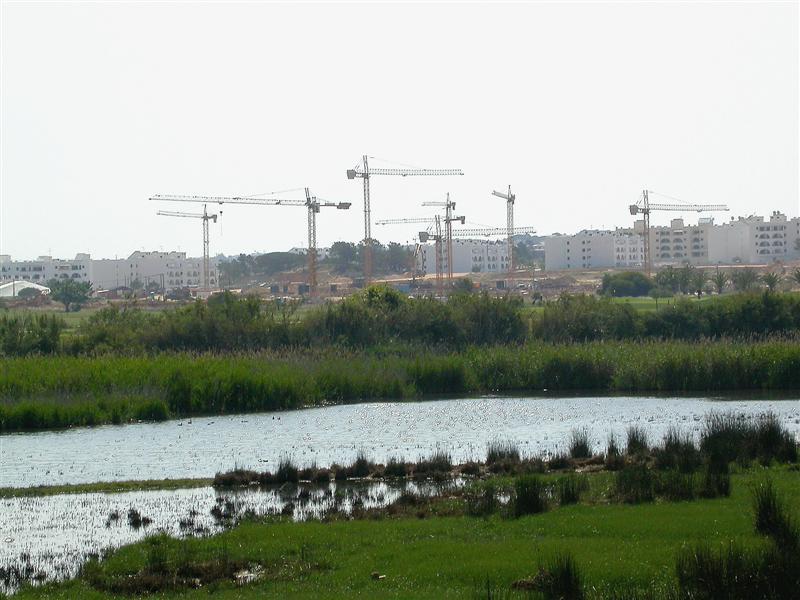
After securing all the permits to build a new tourism complex and golf course on the west side of the wetland, the land owners (Finalgarve) are now preparing the financial package to allow for the development of their project in the Western shore of the lagoon. We have been told that construction will not start soon, certainly not earlier than 2009, possibly even after that.

4. Disturbance

Over the last few months several people have reported that disturbance at the site seems to be increasing – from walkers, joggers, horse riders, camper vans, quad-bikers, etc. This is no doubt partly due to the rampant expansion of the development on the eastern side of the lagoon, and the recent ease of access due to the construction of the bridge over the south end of the wetland. Also, it was reported to us that a flock of sheep and cows grazing on the west of the wetland often caused substantial disturbance during the breeding season. We have contacted the owners of the land, and were told that grazing is not allowed there, and that measures had been taken in the past against it, and that they would take again charge of the matter.

Last April SPEA sent a letter alerting to the problem of overflying small planes carrying commercial banners over the wetland. This letter was sent to all companies operating from the Aeródromo Municipal de Portimão, origin of most of the small aircraft that fly along the central Algarve coast (see http://www.observatoriodoalgarve.com/cna/noticias_ver.asp?noticia=21288 and http://www.barlavento.online.pt/index.php/noticia?id=23720)

In May Rui Eufrasia, SPEA’s local IBA caretaker, has approached a team of people who were flying ultra light parachutes over the lagoon, and informed them about the importance of the site.

I would like to encourage all members of the public that witness any disturbance episode or any illegal activity to report it to CCDR (CCDR Algarve (Ambiente e Ordenamento), Rua Dr. José Matos, 13, 8000-503 Faro, Telefone: +351 289 889 000), and in particular SEPNA – the environmental police (808200520).

5. RSPB sabbatical

In May, Aidan Lonergan, the Director of RSPB Northern Ireland, spent one month at Salgados as part of his RSPB sabbatical, mostly working on two issues

a) Development of a concept for the interpretation centre (target audiences, mains messages, types of exhibits, etc).

b) Fundraising for Salgados Meeting with several company owners and wealthy individuals, mostly British expatriates, who are very committed to Salgados, and discuss and implement with them fundraising plans and strategies to get some money for SPEA to continue with this campaign.

Aidan has met several of you. He is continuing to work on the issue, has made connections with Academics from UCC in Ireland who have agreed to provide the data from their field visits over many years and is currently working on getting more RSPB staff out to Salgados to help with the work.

6. SPEA events

On the 19th April SPEA organised a fieldtrip to Salgados, led by Rui Eufrasia (see details at http://www.spea.pt/index.php?op=act_2008/ssalgados).

Following the success of last year’s event, SPEA organised again a DONA event (similar to the RSPB’s own Aren’t Bird Brilliant project) at the Praia Grande car park on the 16th-17th August, to show beachgoers the spectacular birds that use this wetland.

On the 13th September SPEA will again organise a fieldtrip to Lagoa dos Salgados (see http://www.spea.pt/index.php?op=act_2008/ssalgados for more details).

7. Articles on Salgados in the English press

Last April Len Port published another article on Salgados on three English language magazines widely distributed in the Algarve: Algarve Property, Algarve Goodlife and Algarve Golf Guide. This describes very well some of the issues we are facing in the moment. The article is enclosed (Len Port Salgados)

Last August an article on Salgados penned by Michael Benington was published in Birds Illustrated.

8. Birds

This year’s breeding season has been heavily affected by the April drainage of the wetland, and many nests have been lost. On the plus side, a colony of whiskered terns (6 pairs) attempted to breed in the wetland for the first time, but their efforts were hampered by the drainage of the wetland in late June. Five pairs of little terns also settled to breed in Salgados, but again failed. Two pairs of purple heron bred successfully though. The wader breeding success was also very low – only 3 or 4 pairs pf black-winged stilt fledged young (around 40 pairs last year), and no breeding avocets had any success this Spring (about 45 pairs bred there successfully last year). Ducks also suffered – shoveler did not breed there this year (there were 3 pairs in 2007), while only one pair of pochard raised young there this year (3-4 pairs in 2007).

In spite of all the draining events, birds still flocked to the wetland, and at times Salgados showed us all its splendour (see enclosed photo Birds Abril 2008)

In terms of rarities, a white winged black tern, a mute swan and a white-headed duck have been observed in May.

9. Save Salgados Fund – Donations required

In the last few months both SPEA and myself have been struggling with a problem of capacity – there is nobody who can work on Lagoa dos Salgados on a fulltime basis, not even on a half-time basis, despite the tremendous inputs and dedication of our IBA caretaker Rui Eufrásia. Capacity is indeed a crucial point in the speed of progress in this Salgados policy campaign – if only we had a full time staff member dealing with this issue, things would progress more swiftly. Both SPEA and the RSPB fully recognize this. However, in the real world, this is simply not possible – there are no resources in SPEA for this. The RSPB has actually increased its financial support to SPEA this year in view of the excellent work and results that SPEA is achieving, and the huge challenges that SPEA faces in-country. Given the scale, scope and timing of the multiple threats affecting most of the 93 Portuguese Important Bird Areas, our support is clearly not enough, and unfortunately SPEA’s (growing but small) membership or corporate fundraising hasn’t been able to provide the core budget they need.

We therefore are directly requesting you – friend of Salgados, regular visitor – for direct help.

We need £20,000 to secure a one year salary and expenses for a fulltime Salgados officer – see enclosed draft Terms of Reference specifications. Can you please provide any help to fulfil this? This is the time to act. Please donate – we need you to get a full time Salgados officer, and secure swifter progress – eventually to save this site from further destruction.

Please send your donation to the following SPEA bank account, and mark it “Salgados”. If each birdwatcher that regularly visits Salgados donated a few hundred pounds, we would reach the target soon.


Bank: Millennium BCP
Bank Address: Av. 5 de Outubro, 60-68 1050-059 Lisboa
Account Number: 260345382
Swift Code: BCOMPTPL
IBAN Code: PT 5000330026034538205

We have hold out until this late moment to ask you directly for money – we are now convinced this is the only way out to reach our objectives. It is your time to act - please donate generously. Also, if you have any fundraising idea, want to lead any fundraising activity or want to comment – please get in touch. I will keep you all posted on the level of donations – I am currently trying to set up as donations page on the Just Giving site.

I also emphasize that SPEA needs members to grow its constituency and strength – most of you are not members yet. Please consider joining – it is only 22 € a year! You can receive a bi-monthly email newsletter in English with the latest news (some on Salgados), as well as the membership magazine, a weekly bird observations digest, and many other news. Please find enclosed an English membership form.

10. Thanks

A word of acknowledgement and encouragement to all that have helped us in the last few months.

José Pedro Tavares
Country Programmes Officer for Portugal, Turkey and Greece
International Division
The RSPB
The Lodge
Sandy
Bedfordshire SG19 2DL, UK
E-Mail: jose.tavares@rspb.org.uk

Thursday, July 24, 2008

Salgados Meeting


Greater Flamingos over Salgados

The long-awaited official update from José Tavares (RSPB Country Programmes Officer for Portugal) about the progress on Lagoa dos Salgados has still not appeared.

On the 17th July I attended an on-site meeting at the lagoa together with Luís Costa (President of SPEA), Humberto Rosado (the new President of ICNB - Institute for Conservation of Nature and Biodiversity), João Ministro (Almargem - NGO environmental agency), Rui Eufrásia (Vigilante of Salgados IBA) together with a few other interested parties. The main purpose of this was to portray to ICNB the importance of giving SPA (Special Protection Area) status to this site in order to secure its future. This was the President of ICNB's first visit, he came away very impressed, and Luís Costa told me that he was now very optimistic that the lagoa would be given official protection the near future (at the moment is has none).

The SPEA and ICNB representatives were going on to a further meeting that afternoon with Aguas Algarve to discuss the water requirements which are going to be essential for the future of the wildlife there. The new ETAR (sewage treatment works) is due to be commissioned soon and this will be providing 'grey' water which has undergone tertiary treatment to remove harmful nitrates and phosphates as well as bio-toxins. This is more expensive than the current low level treatment provided by the existing and soon to be defunct ETAR and Aguas Algarve are looking to recover at least some of their costs be selling this water to adjacent golf courses for irrigation. The vital question now is who is going to pay for some of this water to be diverted into the lagoon to keep it topped up during the summer months.


Saturday, July 05, 2008

Lagoa dos Salgados 2008

A huge apology to all those who have visited this site in search of news on progress at Lagoa dos Salgados ("Pêra Marsh"). Although I am still monitoring the situation and am in contact with SPEA and RSPB on a regular basis, my attention and time have been diverted to what is also happening on my own doorstep at Ria de Alvor; I hope to begin a separate sequence of illustrated bulletins on the problems facing this locality (which, as well as being a RAMSAR Site, has become incorporated in the EU "Nature 2000" network since September 2006).

I met Aidan Lonergan (RSPB Director, Northern Ireland) in May this year while he was spending a month-long sabbatical over here with a brief to "look into" the options for the future preservation of the lagoon. Aidan spent his time well, met with most of the parties involved, and is of the firm opinion that this site MUST be saved. I was very impressed at how well he had grasped the many complexities of the situation in such a short space of time. Aidan is in the process of writing up a report on his visit and has vowed to return in the near future to assist with the move to preserve this site.

I have also recently been in contact with José Tavares (RSPB Country Programmes Officer for Portugal) who informs me that there has been a lot happening behind the scenes and that a full update is imminent. I will post that here as soon as it becomes available.

In the meantime, you might find it useful and informative to visit a new Portuguese birding forum "Fórum Aves" http://aves.team-forum.net/ the site is in Portuguese and to access all the sections you need to register (which is free but not easy if you do not understand Portuguese!). Two of the sections, the Galeria (Photo-gallery) and Birds of Portugal in English (for which I act as Moderator) are available to view by visitors, but you cannot post a response unless you are a registered member; if anyone wants a translation of the registration process please let me know. But as a start, from the title page (linked above) select "Início", then select "Birds of Portugal (in English)" and you will find threads on Lagoa dos Salgados as well as Ria de Alvor in which I have linked to various missives, including articles in the local English weekly "The Algarve Resident".

As soon as I have more information I will distribute it.

Best wishes to all supporters,

Colin

Tuesday, January 23, 2007

Altura Reservoir


For anyone visiting Castro Marim or the Tavira saltpans there is another easily accessible locality at a man-made lagoon to the east of the town of Altura.

Leave the A22 motorway at junction 17 (signposted "Monte Gordo") and travel south for 2km. At the T-junction turn right onto the EN125 and travel west for 0.5km to a roundabout and turn left (towards Altura) into the Avenida 24 de Junho - the lagoon is on the left after a couple of hundred metres. The road here is a dual carriageway so you will have to go to the first opening in the central reservation (opposite the entrance to Altura) and do a U-turn. Park with care on the grass verge. This is the west side of the lagoon which can be scanned by 'scope in the afternoon, but in the morning you will need to get onto the east side by going further north to the point where the lagoon meets the road, just after which there is a gap in the fence. Lots of dog-walkers and other "busy bodies" who will come to see what you are doing. I drove through the gap in the fence intending to use the jeep as a hide but was immediately pounced upon by an irate Portuguese man on a motorbike waving his arms and shouting "Privado" - I retreated.


I first visited this locality after learning that a Crested Coot (Fulica cristata) had been seen there in October 2006 with a group of 400 Common Coot. There were also a number of Ferruginous Ducks amongst a variety of other duck species. A more recent visit produced 31 Mediterranean Gulls with large numbers of commoner gull species.


It is probably best to visit at high tide since this lagoon is only a short distance from the sea and is clearly used as a high tide roost. I have the feeling that this could be a very productive site with more frequent observation.

Alpine Accentor 2007


For a long time the Alpine Accentor (Prunella collaris) was one of our "bogie" birds. I had had glimpses at Foia (around the horrible cafe complex) and we knew that they occurred overwintering around the cliffs at Cape St Vincent. After many fruitless hours watching the sea cliffs to the north and south of the Cape it was Roger Skan who (in a state of "high excitement") found three birds feeding on the cliff edge in 2004. Since then we have seen them regularly and managed to also get this as a "lifer" for Jim Winsper, but the birds were always distant and moving very quickly making photography impossible.

On 30th December 2006 Peter Dedicoat, June Taylor and Georg Schreier found five birds feeding around the cliff top and Peter managed a good digiscoped shot. On 13th January this year Roger and I found two birds adjacent to the car-park at Cape St Vincent but two huge coach-loads of noisy Spanish tourists disturbed them. Eventually the "Espanols " departed, the birds returned and were very confiding, and I at last managed to get some good shots just before another coach-load of Germans arrived and walked between me and the birds!!


Friday, December 01, 2006

Red-rumped Swallows (2006)


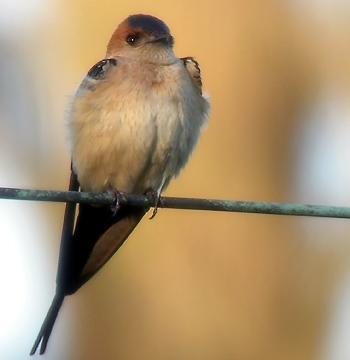
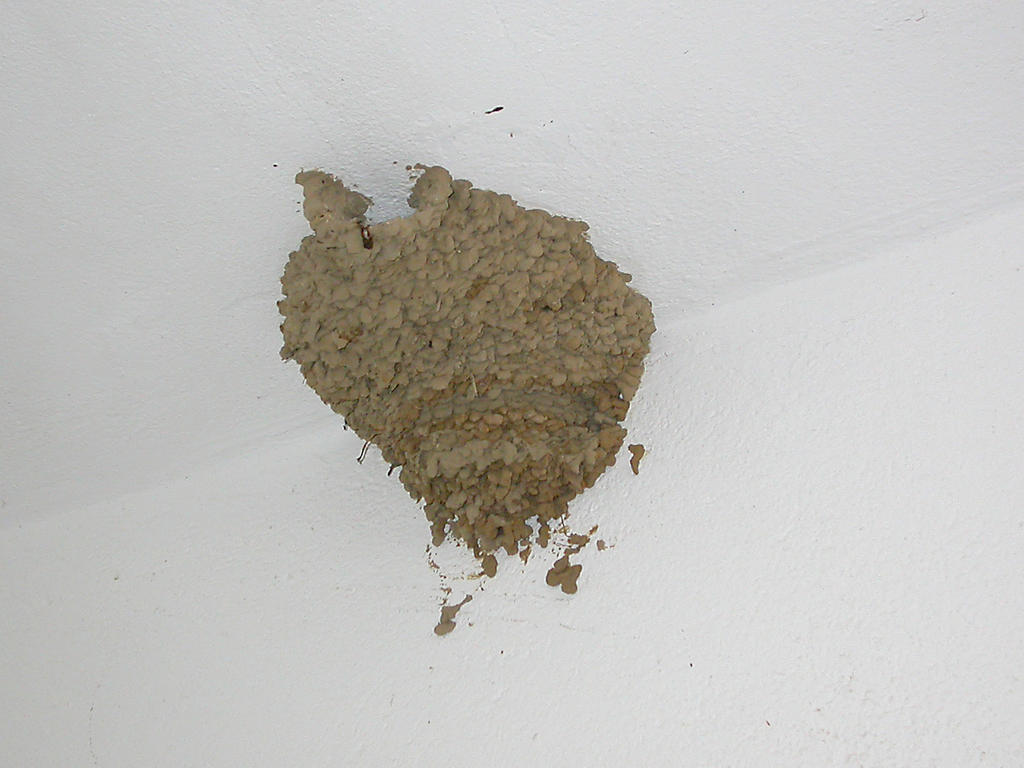
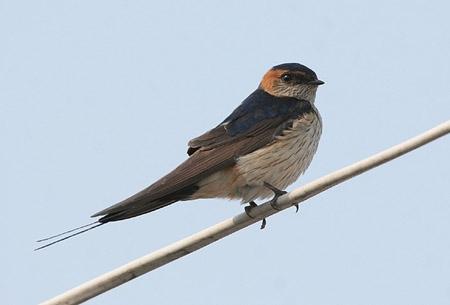
The Red-rumped Swallows which set up home and bred in the passage between the house and the garage returned this year. The nest was refurbished and a small extension to the entrance tunnel was added. We had hoped for an additional nest but no luck this year, and we have no idea whether the returning birds were the original pair, off-spring, or other.

Three broods were raised with five, three then two chicks hatched and fledged. In the autumn activity at the nest was intense with all twelve birds feeding over the garden and apparently all roosting in the nest - very crowded! One fledgling was found several times on the ground and manually returned to the nest. He (she, it?) appeared to be unharmed and was seen flying and returning to the nest after his parents and siblings had migrated south.

We look forward to their return in April 2007.

Um Nova "Vigilante" de Salgados IBA


Every one of Portugal's IBA's (Important Bird Areas) has a designated "Vigilante", or Caretaker, who's role is to generally oversee the "care" of the site. Until recently the vigilante of Lagoa dos Salgados has been Joao Ministro but the role has now been transferred to a local Portuguese birder called Rui Eufrasia.

Rui looks "mean", and he can be; he does a wonderful job in reprimanding any miscreants (dog walkers, horse riders, quad-bike drivers, etc) who threaten the tranquility of this site and the welfare of the birdlife.

But, he is also a very nice guy and an excellent birder who knows more about the birdlife and everything else which goes on at Salgados than anyone else. His command of English is very good and he knows the names of all the Western Palearctic birds in Portuguese, Latin and English - quite an achievement!

If you meet him there please say "hello" - you will learn a lot from him.

Moussier's Redstart


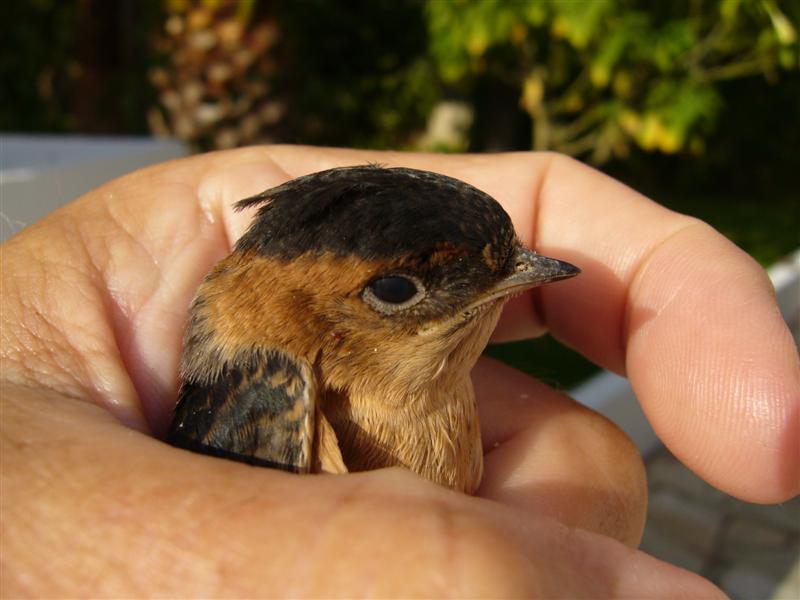
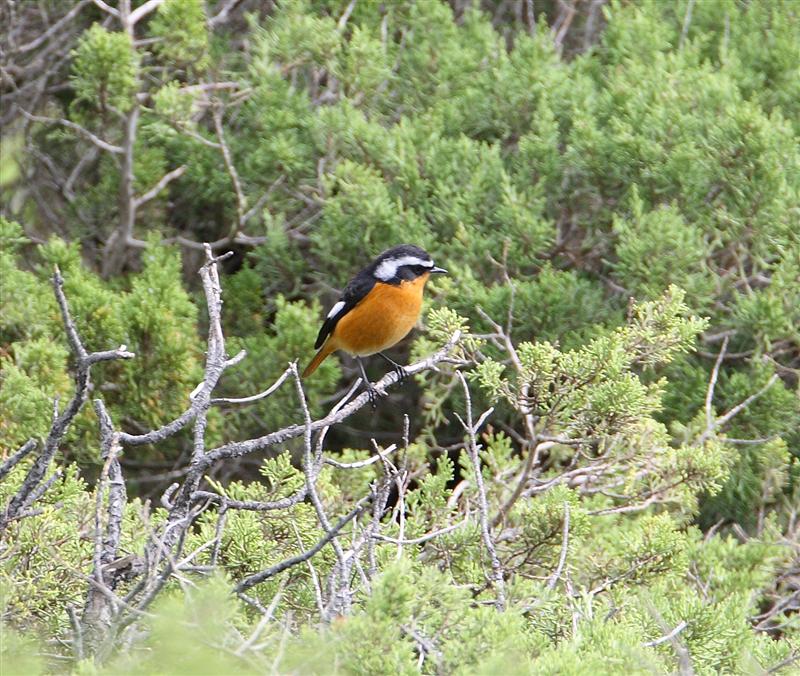
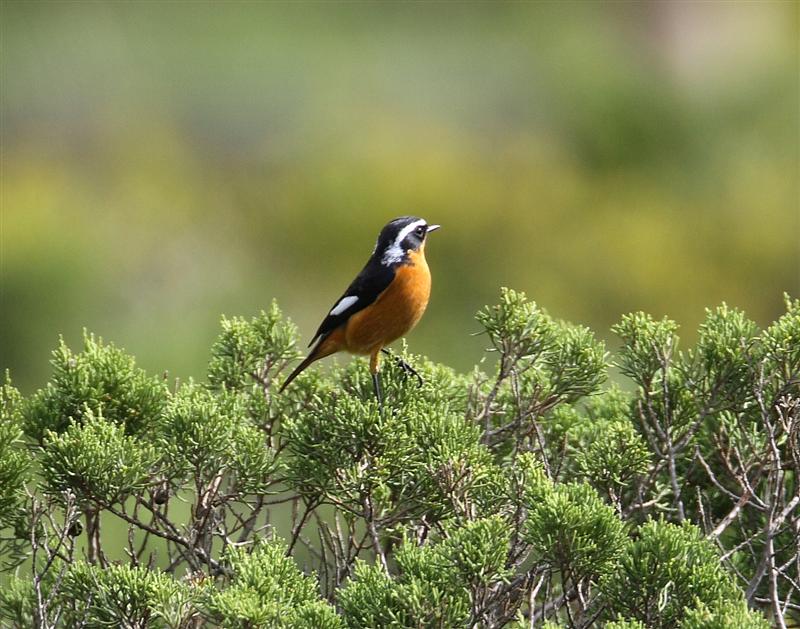
On 16th November a visiting birder, Kevin Wilson (Manager of Gibraltar Point NNR), found a Moussier's Redstart near Fortaleza de Beliche on the road between Sagres and Cape St Vincente. If accepted by the Portuguese Rarities Committee this will be the first record for Portugal. I am grateful to Marcial Felgueiras (Warden of the A Rocha field centre where Kevin was staying) for informing me of this find and to Kevin himself for giving me precise locality details. I went there myself on the 18th November and managed to locate the bird and take some photographs - a cracking adult male in pristine, fresh autumn plumage.

Lagoa dos Salgados update

Apologies for the absence of posts for such a long time. This is partly due to the lack of information and the fact that a meeting convened in May (2006) between all parties involved was cancelled. The situation is now looking a little brighter and José Tavares (RSPB) and his counterparts in SPEA have been working very hard. Rather than post the actual document here I would refer you to the SPEA website section on IBA's http://www.spea.pt/IBA/ibas/35.html where the latest information is available in English.

Wednesday, November 02, 2005

RSPB Report (Salgados)

Lagoa dos Salgados

Key Proposals for Management
This document was written by Matt Self
This is an SPEA-RSPB joint project
For more contacts: Jose.tavares@rspb.org.uk Ivan.ramirez@spea.pt Or:http://www.spea.pt/MS2/ibas/35.html


(Notes from site visit 29-31 March 2005)

Introduction

Lagoa dos Salgados, one of few wetlands on the western Algarve coast, is highly important for birds and has been recognised as an IBA by SPEA. Unfortunately, the site has not been designated as a SPA (under the Birds Directive) by the Portuguese government, and lobbying continues at a high level. SPA designation is unpopular, as it is seen as a hindrance to development. There are elections in 2005 and 2006, it is unlikely that this situation will change.
There has been an outcry in recent years over a proposed development on the north and west sides of the lagoon, consisting of a golf course, two hotels and many villas, a total of some 10,500 beds. SPA designation would prevent the project from going ahead. So far, the only obstacle to the developers has been an old planning law that prevents building within the historical flood limits of rivers and other low lying areas. The regional land planning agency have told the developers to work above this elevation. SPEA has also requested flexibility in the project boundaries to work with the ecological sensitivities of the site. Recent meetings have resulted in a sincere compromise from the developers to adapt their project.
Another threat to the lagoon comes from the proposed construction of a new sewage treatment works. The old works currently supplies most of the water to the lagoon, but there is no plan for the new works to include a transfer to the lagoon.
It is clear that the development will go ahead, and that SPEA and the RSPB have to achieve the best outcome within this. The Lagoa de Salgados faces an uncertain future, but there are considerable opportunities to work with the developers, Aguas de Algarve and others to get enhancement and management work carried out.
The role of this report is to consider possibilities for creative management of the site within the constraints of the impending development and potentially restricted water supply.
Summary of constraints:Potentially far less water entering the siteProximity of disturbance in the form of golf, hotels, roads etc.A reduction in the open aspect of the site on the north and west sides
Limitations on the water supply to a site are common in wetlands throughout the world, but in this case the loss of the ETAR supply would be unusually significant, as there is very infrequent flow in the Ribeira de Espiche to compensate. The normal response to water supply issues at wetlands is to maximise usage of the water available throughout the year (particularly if supply is highly seasonal) by storage of winter surplus, and to use compartmentalisation (installation of bunds or banks, and water control structures) to create concentrated areas of ideally managed land.

Key proposals for management

Ensure a supply of water from the new ETAR

This is the most fundamental of the proposals, and cannot be understated. Natural flows in the Ribeira de Espiche (and the Ribeira de Vale Rabelho) are highly intermittent and limited to winter flood events. They are unable to maintain a reasonable area of surface flooding in key periods such as the breeding season. Ideally, a flow could be routed to one of the proposed water storage areas (see below) so that it can be stored and distributed as necessary.
Presumably the new development would use considerable amounts of water, and their should be the potential to direct their discharged golf course water into the lagoon. Ideally this would go into a tertiary treatment reedbed first (see below).

Create a water storage area

A bunded area just to the north of the lagoon could be used to store water from winter rainfall and flood events. The bunds should be relatively low (eg.1.5m high) with gently shelving sides to avoid reducing sight lines, which can deter bird usage. Locating the bunded area (or indeed areas, as there could be more than one compartment) in the dry grassland area to the immediate north of the lagoon would make use of the gentle fall in land levels. Water could gravity feed into the lagoon in winter from the channels running north-south through the grassland, linked into the Ribeira de Espiche by a cross ditch at the north end (where the old farmhouse is). The storage area could also be filled or topped up by pumping from the lagoon. Soils are less sandy farther away from the dunes, and more able to retain surface water there.
Material for the bunds can come from excavation within the bunded area, to increase capacity, and also from excavation work in the core lagoon area (see below) as part of work to enhance features there.

It would not be possible for a water storage area to maintain a large area of surface water without supplementation from the new ETAR. However, the tens of thousands of cubic metres of water stored can be trickle fed to offset evaporational losses in spring, and because of the non-ETAR source, can improve water quality. The value of the water would be maximised if enhancement work was undertaken in the core lagoon area (see below).
The bunded water storage area has the potential to be a rich area for wildlife in itself. Some of the area could be planted as a reedbed, ideally if this was in a separate unit. This would be valuable marginal cover, as well as providing some screening from the new development. If suitably engineered, the reedbed would have the potential to improve water quality and be an attractive edge for the new golf course and hotel development. There could be opportunities here for the developers to create this as part of their work, to the benefit of both their project and wildlife. If the bunded area is a reasonable size (more than 2ha), it would be attractive to wildfowl when full, and to waders when the water level recedes leaving areas of newly exposed mud. The slope from the north down to the lagoon would be ideal for this, ensuring some open water and mud at a wide range of water levels. Ditch enhancement and some low ridges (c 0.5m high) would further increase the interest at a wide range of water levels.
In an ideal situation, a pipe from the new ETAR could be installed directly into the reedbed compartment for final treatment (‘polishing’), before feeding it into the main water storage area.

A valve or sluice would allow water to be gravity fed into the main lagoon, using ditches that are still present from the old rice fields. The sluice can be a very simple structure. Ideally the flows would be concentrated into a core area with enhanced features.
Enhance water features within the lagoon area
This would consist largely of enhancement of former ditches from the old rice fields, both by deepening and also reprofiling to ensure gently-shelving sides. Low bunding (less than 0.5m) would ensure that water is retained for longer, and would provide a place for the excavated spoil. Bunds of this size are almost imperceptible when viewed, and are a standard feature in many created and restored wetlands.
Water levels were high (4.00m) at the time of my visit, so it was not possible to examine features within the core lagoon area. However, the most suitable area is likely to be relatively low in the system and not adjacent to tracks and paths.

Install a pipe through the sand bar, linking lagoon and sea
At present the management of the outlet is ‘all or nothing’, based on sporadic opening of a channel using an excavator. This will still need to be done, to allow flushing of accumulated silt and debris, and to ensure an adequate discharge capacity for very large, infrequent flood events. The ingress of sea water also maintains brackish conditions in the lower lagoon, and increases overall water quality when the majority comes directly from the old, poorly-functioning ETAR.
However, a pipe will allow a more steady, small scale ingress and egress through the sand bar. This will maintain more stability of salinity, avoiding sudden changes from fresh to sea-water. It will allow outflow of small floods, a far more regular occurrence than large flood events, and a valve on the end will allow some degree of control. This is important in the current situation where the golf course people are not allowed to open the sand bar outside winter, and should be welcomed by them (and hopefully installed by them).
The water quality at the time of the visit was very poor, with a strong odour and noticeable algal growth.
Further work needed
A detailed topographical survey of the core lagoon area will be needed, to ensure suitable placement of the bunds and sluices. This will need to be done when the lagoon is drained down, and related to local datum.

Matt Self 5.5.05

Proposals for a water management system at Lagoa dos Salgados
SummaryThe area of the lagoon declines greatly when water levels fall from 4.0m to 3.75m - reinstatement of field ditches and some pool creation would maintain the interest of this area into spring and summerStorage of winter surplus rainfall would reduce dependence on water from the ETAR, improve water quality and permit larger areas to be kept wet through the springA shallow storage area with a low bund (<1m high) in the northern part of the area would increase wet habitat and allow gravity feed into lower areasA 2ha area in the northern half flooded to a maximum depth of 0.50m (mean depth 0.25m) would be able to retain lagoon levels at 3.75m into July in a typical year.
Currently, water levels in the Lagoa vary from around 4.2m in winter, down to 3.6m in mid summer. However, within these periods the levels can change rapidly due to opening of the sand bar at the lowest point, or storm events in the catchment. The effects of these water level changes are magnified by the very flat ground between the elevations of 3.75 to 4.0m. At present, when water levels drop from 4.0m to 3.75m, around 5.4ha of wetland dries out. The benefit of this area would be maintained if the current derelict ditches were reinstated (fig.1), to a bed depth of about 2.6m (above the existing gauge board), with gently shelving margins (a slope of around 30%). In addition, the junctions of ditches could be opened up into shallow pools. As water levels recede in spring, these features would retain approximately 1 metre depth of open water, and muddy edges.
There is very little water available in the Espiche catchment, and a high dependence on water from the water treatment plant nearby. This has led to some water quality problems. A solution to this is to make more use of surplus winter rainfall, which tends to be concentrated in relatively few days, leading to flash flooding of the catchment and lagoon area. Rapid rises in water levels tend to lead to the outlet channel being opened, and much of this water being lost to sea.

Storage of some winter surplus rainfall would reduce the severity of flood events and may result in less necessity to open the outlet channel. However, the primary benefit of the water would be to offset the evapotranspiration losses in and around the lagoon by a controlled gravity feed during the spring, and on into the summer if feasible. This would maintain more water in and around the lagoon in the breeding season than would otherwise be the case. The quality of the water will also be considerably better than that from the ETAR.


A water storage area would increase the wetness of the slightly higher northern part of the lagoon area during the spring, and create additional areas of wet habitat. Enhancement of ditches would not only improve water distribution (especially during low water periods), but also increase the availability of wet areas in the northern part of the lagoon area. The water storage area would not have the appearance of a reservoir (figure 1). A low bund would follow the approximate line of the 4.0m contour. The bund would only be 1.0m high, with a broad crest and gently sloping sides (less than 30%). The 400m length indicated would retain up to 50,000m3 if held to a depth of 0.5m at the bund, allowing a freeboard of 0.5m to avoid wave damage to the bund crest.

The additional features between the lagoon and the bund would create an additional 1.20ha of open water on top of the 0.93ha of the lagoon (at 3.75m). The area faces a severe water deficit for much of the year, starting in late February and increasing cululatively to 560mm by the end of June in a typical year. The 2.13ha of open water would lose 11,900m3 of water by the end of June. The bunded water storage body would lose a similar quantity over the same period. So given a full storage area in February, the water levels could be maintained at 3.75m in the lagoon and new features to the end of June using the stored water, whilst leaving 25,000m3 available for further supplementation into July and August, or as a contingency for an unusually dry year. Some of this will be lost to seepage, both to groundwater and to the sea.
The storage water calculations assume no contribution from the ETAR. Small quantities would be able to supplement the lagoon, and any quality problems would be diluted by the storage water. There is also the potential for sea water contribution through the outlet channel when it is opened in winter. 

Saturday, October 22, 2005

SALGADOS (October 2005 Update)

The following update arrived via email to all interested parties in mid October. It is lengthy, but well worth reading. The retraction of the submission of Lagoa dos Salgados as a proposed RAMSAR site is unfortunate, but probably not critical. The final part of this document (highlighted in red text) is significant. Apart from the developers having reduced the scale of their proposal by almost 50% (in terms of volume of new accomodation), they have shown a willingness to collaborate with SPEA and the RSPB in maintaining the viability of the lagoon as a natural resource. The overall situation is much more complex than any of us thought just over one year ago and both the RSPB and SPEA must be congratulated for clarifying this, disseminating the information and doing a splendid job in bringing together, and negotiating with, all interested parties; given the obscure way in which the "Portuguese machinery" works, this is no small triumph! There is some way to go yet before we have any sign of victory, but I think that we have some cause for optimism.


Lagoa dos Salgados – Situation Update (October 2005)

This briefing follows the one from last April, and aims to summarise the latest developments with the efforts being undertaken by Sociedade Portuguesa para o Estudo das Aves (SPEA – BirdLife in Portugal) and the Royal Society for the Protection of Birds (RSPB – BirdLife in the UK) to secure the long-term conservation of the Lagoa dos Salgados, an unprotected Important Bird Area (IBA) in the Algarve Coast.

This briefing was due to be sent during the summer, but the many recent developments (see below) have turned the situation rather volatile, with information coming in and follow-up meetings set up throughout the summer, so we have waited until the situation became clearer before sending you all the present up-date

Summary of the situation in April 2005 (see previous briefings for further detail)

+ We were facing a big tourism development project (10,000 beds, 18-hole golf course) planned for the area immediately to the west and north of the lagoon, that would occupy significant parts of the western and northern margins of the wetland. This project did not have planning permission due to a negative evaluation by the local land planning agency (CCDR), but there was intensive pressure to deconstruct and reverse this binding opinion.
+ We were facing the impending construction of a new sewage treatment plant that will substitute the current one, and therefore remove the main current source of water feeding the wetland. The original plans for the new sewage treatment plant did not include any outflow to the wetland.
+ The site was not protected, and the Portuguese government was unwilling to declare it as an Special Protected Area (SPA) under the Birds Directive.

Actions by SPEA and the RSPB between April and September 2005

New sewage treatment plant – definition of the remit of the Environmental Impact Assessment (EIA) and development of the EIA proper

The new sewage treatment plan had, by law, to be subjected to an EIA. A critical step in the EIA process was to define and agree on the terms of reference (TOR) of the EIA proper. This is done by an EIA evaluation commission that is established for each project under EIA obligations. The EIA commission has representatives from the land planning and local and central statutory agencies, including the Portuguese government nature conservation agency (ICN), CCDR, etc.

It was clear that the first step would be to make sure that the EIA remit would cover the needs of the lagoon. There was the clear danger that the TOR for this EIA would exclude anything to do with the wetland, as the new sewage treatment plant is several kilometres away from the wetland. It was therefore crucial to lobby and inform all the stakeholders in the EIA commission to introduce the needs of the lagoon in the specific TOR of this EIA. SPEA and the RSPB organised meetings with both ICN and CCDR last April, to convey this point. We are happy to report that we were successful here. This means that the EIA had to consider the needs of the lagoon.

The EIA process then started in earnest, and was contracted out to a environmental impact assessment consultancy (IPA, Inovação de Projectos em Ambiente, lda). Our next steps here were to provide this company with our data and priorities for the lagoon: In early May SPEA and the RSPB met with the directors from this company and exchanged views and data, including Joao Ministro’s general evaluation of the biodiversity importance of the lagoon (see below).

IPA’s team were suggesting that the wetland should be maintained at the 2 metres asl (above sea level), a value far below the average current dimensions of the wetland. We have conveyed to them the need to change that in the final EIA report, and also discussed with them the relevance to propose the establishment of a system and process that would allow for an integrated management of the wetland water requirements.

We can also report that the submarine emissary (600 m long at sea) that will be built as part of the new sewage treatment plant – and that will serve an area with 300,000 summer residents - will cross the southern part of the lagoon from northeast to southwest. The emissary will cross the existing golf-course on the eats side of the lagoon (Golfe dos Salgados).

We conveys to the IPA’s team our concerns and suggestions regarding the issue of minimizing disturbance to the birds and the habitats from the work to install the emissary, namely seasonal restrictions to the construction work, etc.

More, the new sewage treatment plant will produce a substantial amount of water with tertiary treatment that will be provided, at a cost, to the existing and future golf-courses in the area. It is not yet clear where all the infrastructure to transport this water from the plant to the golf courses will be laid. Again, the location of these may have an impact on the wetland, and we conveyed our concerns to the IPA team.

The EIA study has been finished, and has been sent to the customer, but hasn’t been released to the public yet, and we haven’t seen the final draft – usually it takes about 6-9 months in between delivery to the customer and public disclosure for comment. SPEA is waiting for the compulsory public scrutiny window in order to evaluate and comment on this study.

Studies and suggestions on the hydrology and management options for the lagoon, as well as general characterization of the biodiversity importance of the lagoon

It is clear that during 2005-2006 several important decisions regarding the long-term future of the Salgados wetland will be taken (EIA, new sewage treatment plan, planning permission for the tourism development, etc). In the beginning of this year SPEA and the RSPB have thus decided to develop some quick assessment of the biodiversity importance of the lagoon, and about several aspects related to the water management of the site, to inform all these processes and decisions. Two studies were developed:

b.1 – a general study on the biodiversity importance of the lagoon, including some mapping of areas important for birds. This was the responsibility of Joao Ministro, the local IBA caretaker, with abundant local knowledge and many years of experience in monitoring the lagoon

b.2 – some practical considerations about the water management of the lagoon, including some recommendations for future water level management (as one of the main issues affecting the biodiversity of the lagoon had to do with water quality and the regular emptying-out of the lagoon, see previous briefings). This was the responsibility of Matt Self, an RSPB senior ecologist.

Matt Self visited the site in the end of March, and these reports were produced over the following 3 months. Drafts of the reports were in the meantime sent to the company developing the EIA. These reports have also been shared with the main stakeholders (the developers, CCDR, etc).

Both these reports are available to all interested individuals. They are big files (total 4MB), so please contact me if you want to receive them in your e-mail inbox.

Advocacy strategy to protect the site

As mentioned, SPEA and the RSPB feel that the site should be protected as an Special Protected Area (SPA) under the Birds Directive. However, the Portuguese government had clearly told us that they were not willing to declare new SPAs in the near future, for a number of reasons:
SPAs are still seen a negative hindrance to development by all local and regional bodies, so the central government suffers a political cost in declaring new SPAs
Locals elections (just held last weekend – 9th October) meant mayors were not available to discuss and take forward any “controversial” issue, worried about their re-election prospocts
The Portuguese government is under pressure from the EU Commission to progress on a infringement case following a formal complaint regarding poor implementation of the Birds Directive, in particular regarding the protection of steppe habitats, so they will not dedicate time and effort to any initiative related to SPAs before solving that complaint.

After discussing the issue internally and with several policy and advocacy experts, and given the position of the Portuguese government, SPEA and the RSPB have then developed an alternative advocacy strategy to secure some form of legal protection for this site. The alternative solution devised was to aim for Ramsar designation (under the Ramsar convention) as a first step that would eventually lead to further designation later on. Main reason for this solution:

The site fulfils Ramsar criteria
Ramsar is less politically charged than SPAs
In November there will be a Conference of the Parties of the Ramsar Convention (in Uganda), and the Portuguese Government had announced it would like to declare a few new Ramsar sites for that meeting, so there would be a window of chance here.

Please note that the final aim would always be to declare the site as an SPA, but this would be an interim solution offering us some political leverage and funding opportunities.

SPEA and the RSPB have then developed an advocacy campaign to lobby for this. In April SPEA and the RSPB have formally suggested to the Portuguese Ministry of Environment, in a formal meeting, these intentions. In several follow-up meetings with key staff from the ministry in April and May, the issue was always analysed. SPEA and the RSPB has also done technical preparatory work needed for the designation of the site, including filling in the Ramsar form for the site (available upon request). All this resulted in the inclusion of Salgados in the internal ministry documents being prepared for the designation of new Ramsar sites. SPEA had also started to contact with the other stakeholders regarding their views on this designation, and the response was positive (including from the developers).

In early September, SPEA and the RSPB met again formally with the Portuguese ministry of environment to secure a final decision on the matter – please see enclosed briefing produced for that meeting (in Portuguese). It was then that we were told of new and unexpected developments that changed completely the picture.

Unknown to us, in September 2004 a British citizen sent a petition to the European Parliament (EP) about Salgados. This petition was accepted by the EP and triggered some correspondence between the EP, the EU Commission and the Portuguese Government. Last March the EU Commission wrote to the Portuguese government asking why the area was not classified as an SPA, as was identified as an IBA by SPEA (please see enclosed petition and correspondence).

Faced with a contentious case with the Commission about steppe SPAs, and afraid that Brussels would start infringement procedures again if indeed the Portuguese authorities recognised now that Salgados was important, the Portuguese government then decided to freeze any form of protection of the site. In that meeting in September SPEA and the RSPB were then told that Salgados would be taken out of the candidate new Ramsar sites list that the Portuguese government will announce November.

So the situation now is that we have an all-or-nothing situation regarding the protection of the site. Either we can convince the Portuguese government and the local authorities to protect it as an SPA, or nothing at all. Obviously, that is what SPEA and the RSPB are now going to try. The local mayors (the wetlands borders both Silves and Albufeira councils) were both re-elected on Sunday, so SPEA and the RSPB will now address this issue with them, taking in consideration the new developments with the tourism development reported below.

The petition to the EP also illustrates how a well-meaning action by a concerned citizen has spoiled the legal protection of the site as a Ramsar site, and the advocacy strategy being developed by SPEA and the RSPB.

Meetings with developers (Irmaos Cavaco)

In the meantime, very positive developments have occurred in this area. In August SPEA and the RSPB have been sent a new plan for the tourism development, which considerably reduces the area it occupies. Faced with the negative evaluation by CCDR, and also with the pressure and lobbying that both SPEA and the RSPB have been doing over the last year, the developers have halved the number of beds (from 10,000 to 5,500) and have consequently “pulled” their golf course a few metres higher, so that it now is above the 4,5 metre asl line in the west of the lagoon, thus complying with the CCDRs technical opinion. In the north of the wetland the golf academy goes beyond the 4,5 m asl contour, but they the developers are not intending to do any alteration of the soil profile there, just plant a golfing green for a golf academy. Further, in the new plan the developers leave an area of original habitat (abandoned farm fields and maquis) of around 15ha in the centre of their property, in between the two streams.

SPEA and the RSPB studied carefully the new plan for the area, and eventually met the developers in mid September to discuss it further. The Cavaco brothers have then offered SPEA and the RSPB the possibility of active collaboration in the landscaping of the area around their development, to enhance biodiversity. They have also offered SPEA and the RSPB the old farmhouse located to the north of the wetland to establish an eventual interpretation and visitor centre, and were open to negotiate technical details about the work to be done. In the meantime, the Cavaco brothers have resubmitted their new plan to the CCDR, which is now evaluating it. SPEA and the RSPB are in close contact with CCDR: their first, informal reaction was positive, since the new plan complies with the main reason for the initial negative opinion (overlap between the golf-course and the historical flood limit)

SPEA then sought endorsement from their board about this new development – the possibility of engaging with the developers in an active collaboration. The response was positive.

Next steps:

SPEA and the RSPB will meet with CCDR in the end of October to follow this up, and get information about any planning permission, as well as the designation of the site as an SPA, etc.
SPEA and the RSPB will submit to the developers a proposal regarding further actions that can happen to enhance the habitat and biodiversity value of the site, taking in consideration the new development plan.
SPEA and the RSPB will meet with Aguas do Algarve in the end of October to evaluate latest developments with the EIA and the construction of the new sewage treatment plant. Please note that even if the authorities require a compulsory outflow from the new sewage treatment plan to the lagoon, the important issue of who will pay for this water (that needs to have tertiary treatment according to EU legislation) is still outstanding.
SPEA and the RSPB will meet with the local councils in the end of October to discuss their approach towards declaration the site as an SPA

The next briefing is planned for the beginning of 2006, give or take one or two months to accommodate new developments.

If any of these points require clarification, please contact us directly.

Yours sincerely,

José Pedro Tavares
Country Programmes Officer for Portugal, Turkey and Greece
International Division
The RSPB
The Lodge
Sandy
Bedfordshire SG19 2DL, UK
E-Mail: jose.tavares@rspb.org.uk

Luis Costa
Director
SPEA
Rua da Vitória, 53 -3º Esq
1100-618 Lisboa, Portugal
E-Mail: luis.costa@spea.pt


Saturday, October 08, 2005

"Super-Dog"

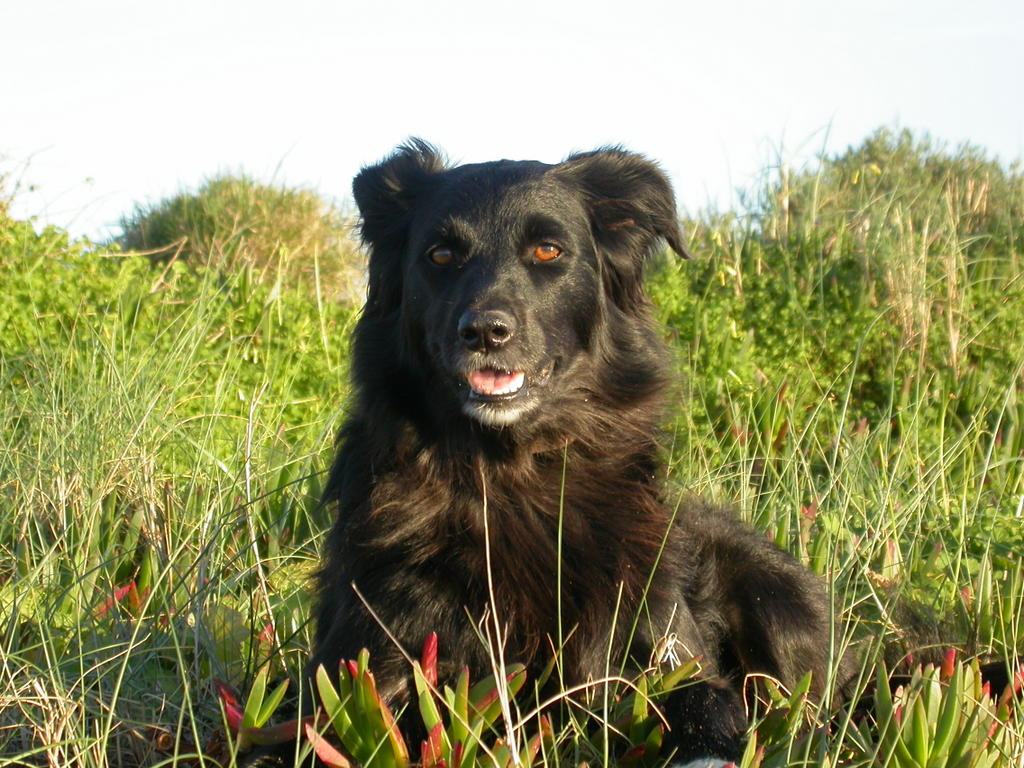
Everyone who has ever met me on my twice-daily tour of the Ria da Alvor will also have met my dog "BODI". She was found as a stray puppy, together with her sister, on the beach at Alvor apparently (we understand) having been abandoned by her owner, a local fisherman, who's bitch had had a litter of seven - five dogs and two bitches. It is common for Portuguese peasants to abandon female puppies because they do not want more pups and thay cannot afford to have them spayed. Bodi was originally christened "Boadicea" and her sister "Cleopatra" by my friend Gail who found them. Gail re-named Cleopatra as "Petal" (no comment!!) and we decided that Boadicea, being a bit of a mouthfull, should become "Bodi".


"ALERT"

She was eight years old this September and during those years this dog has become my next-but-one best friend and constant companion. As she grew it became apparent that a large portion of her genetic make-up was Border Collie, and she shows many of the characteristics typical of that breed: super intelligent, very active, extremely good-natured with other dogs, cats (we have seven who all think that Bodi is a very large, friendly cat) and children and just about anybody else but particularly birders - to Bodi human being plus binoculars and/or telescope = friend.


"INTELLIGENT"

Bodi takes me out for walkies twice a day for a total of about four hours; in mid-summer it is a 5.30 am start as I am pulled out of bed and told it is "time to go". When she was younger I would walk a total of about 12km a day with her, and for every kilometre I walked she would run (chasing rabbits, hares and foxes) at least 4 km. I once calculated that we had walked to Johannesburgh and back (twice)!!


"COY"

She loves people, and is not at all choosy as to whom she speaks, so if you see her before you see me please say "HELLO", and if by chance you have a doggie biscuit (or any sort of biscuit) in your pocket, you will have made a friend for life.


Sunday, September 11, 2005

Garden Breeders 2005


This year the list of birds breeding in the garden is:

Common Quail
Littel Owl
Eurasian Collared Dove
Crested Lark
*Red-rumped Swallow
Eurasian Blackbird
Blackcap
Garden Warbler
Sardinian Warbler
Great Tit
Woodchat Shrike
House Sparrow
Chaffinch
European Serin
European Greenfinch
European Goldfinch

For the past two years the passageway between the house and the garage/workshop has been "investigated" by Barn Swallows which we hoped might nest. This year, in the last week of June, the beginnings of a nest appeared just above the door to my officina (workshop) but the first attempts ended in small piles of dried mud on the floor. When I realised that the "builders" were not Barn, but Red-rumped, Swallows I immediately created a mud-bath in a corner of the garden to provide them with raw material. After ten days the nest was completed.


The birds were very active and furnishing the nest with feathers of chickens and Helmeted Guineafowl (very posh!) from the small farm along the track. After four days the birds disappeared and I feared that they had deserted because of disturbance (we have seven cats) or had just found an alternative site. One morning, a close inspection of the nest revealed a Greater Horseshoe Bat (Rhinolphpus ferrumequinum) roosting attached to the outside of the nest. After careful removal (and rehoming) of the bat the swallows returned within a few hours and, to cut a long story short, proceeded to rear a brood of four young. Most interesting was that at one point four adults were feeding the young - perhaps Aunt and Uncle, or just an immature pair which had not bred?

Adults and young continued to use the nest as a roost but after two weeks it became apparent that a second brood had been produced and by the end of August another two (possibly three) fledgelings appeared. At the time of writing (11th September) the birds have left the nest, one or two occasionally returning at night, but they are clearly preparing for a long journey south. I feel very privileged to have had these swallows nesting in "my back passage" and look forward, hopefully, to their return next spring.


Saturday, August 13, 2005

MY GARDEN LIST

My home is on the Quinta da Rocha peninsula which is bordered by the Ribeira (River) Alvor and Ribeira Odeaxere and is adjacent to the tidal lagoon of the Ria da Alvor. The great mixture of habitats in a relatively small area results in a large and varied list of resident birds and the location near the southwestern-most point of mainland Europe also produces large numbers of migrants. The bird observatory and field study centre (Cruzinha, the home of the now worldwide A Rocha organization - www.arocha.org) close by have recorded, in their trapping and ringing programme, a large number of scarcities and rarities.


My own "garden list" includes all species observed either perched within my land (an area of 4,000 square metres) or species of which I can be confidently certain have flown over my "air space" since March 1997; it does not include species just seen from my garden:


Great Cormorant (Phalacrocorax carbo)
Little Egret (Egretta garzetta)
Grey Heron (Ardea cinerea)
Cattle Egret (Bubulcus ibis)
Black Stork (Ciconia nigra)
White Stork (Ciconia ciconia)
Eurasian Spoonbill (Platalea leucorodia)
Greater Flamingo (Phoenicopterus ruber)
Mallard (Anas platyrhynchos)
Black-shouldered Kite (Elanus caeruleus)
Black Kite (Milvus migrans)
Short-toed Eagle (Circaetus gallicus)
Eurasian Marsh Harrier (Circus aeruginosus)
Hen Harrier (Circus cyaneus)
Montagu's Harrier (Circus pygargus)
Common Buzzard (Buteo buteo)
Booted Eagle (Hieraaetus pennatus)
Osprey (Pandion haliaetus)
Common Kestrel (Falco tinnunculus)
Peregrine Falcon (Falco peregrinus)
Red-legged Partridge (Alectoris rufa)
Common Quail (Coturnix coturnix)
Eurasian Oystercatcher (Haematopus ostralegus)
Black-winged Stilt (Himantopus himantopus)
Pied Avocet (Recurvirostra avosetta)
Stone-curlew (Burhinus oedicnemus)
European Golden Plover (Pluvialis apricaria)
Grey Plover (Pluvialis squatarola)
Ringed Plover (Charadrius hiaticula)
Kentish Plover (Charadrius alexandrinus)
Northern Lapwing (Vanellus vanellus)
Common Snipe (Gallinago gallinago)
Black-tailed Godwit (Limosa limosa)
Whimbrel (Numenius phaeopus)
Common Redshank (Tringa totanus)
Common Greenshank (Tringa nebularia)
Common Sandpiper (Actitis hypoleucos)
Dunlin (Calidris alpina)
Yellow-legged Gull (Larus michahellis)
Lesser Black-backed Gull (Larus fuscus graellsi)
Black-headed Gull (Larus ridibundus)
Rock Dove (Columba livia)
European Turtle Dove (Streptopelia turtur)
Eurasian Collared Dove (Streptopelia decaocto)
Rose-ringed Parakeet (Psittacula krameri)
Common Cuckoo (Cuculus canorus)
Barn Owl (Tyto alba)
Tawny Owl (Strix aluco)
Little Owl (Athene noctua)
Red-necked Nightjar (Caprimulgus ruficollis)
Alpine Swift (Tachymarptis melba)
Common Swift (Apus apus)
Pallid Swift (Apus pallidus)
Common Kingfisher (Alcedo atthis)
European Bee-eater (Merops apiasterUpupa epops)
Eurasian Wryneck (Jynx torquilla)
Lesser Spotted Woodpecker (Dendrocopos minor)
Great Spotted Woodpecker (Dendrocopos major)
Crested Lark (Galerida cristata)
Thekla Lark (Galerida theklae)
Eurasian Skylark (Alauda arvensis)
Sand Martin (Riparia riparia)
Eurasian Crag-martin (Hirundo rupestris)
Eurasian Swallow (Hirundo rustica)
Red-rumped Swallow (Hirundo daurica rufula)
House Martin (Delichon urbica)
White Wagtail (Motacilla alba)
Spanish Yellow-wagtail (Motacilla flava iberiae)
Eurasian Wren (Troglodytes troglodytes)
Dunnock (Prunella modularis)
European Robin (Erithacus rubecula)
Black Redstart (Phoenicurus ochruros)
Common Redstart (Phoenicurus phoenicurus)
Whinchat (Saxicola rubetra)
Common Stonechat (Saxicola rubicola)
Northern Wheatear (Oenanthe oenanthe)
Black-eared Wheatear (Oenanthe hispanica)
Eurasian Blackbird (Turdus merula)
Song Thrush (Turdus philomelos)
Mistle Thrush (Turdus viscivorus)
Zitting Cisticola (Cisticola juncidis)
Western Olivaceous Warbler (Hippolais opaca)
Melodious Warbler (Hippolais polyglotta)
Blackcap (Sylvia atricapilla)
Garden Warbler (Sylvia borin)
Sardinian Warbler (Sylvia melanocephala)
Willow Warbler (Phylloscopus trochilus)
Common Chiffchaff (Phylloscopus collybita)
Iberian Chiffchaff (Phylloscopus ibericus)
Spotted Flycatcher (Muscicapa striata)
Pied Flycatcher (Ficedula hypoleuca)
Great Tit (Parus major)
Blue Tit (Parus caeruleus)
Short-toed Treecreeper (Certhia brachydactyla)
Golden Oriole (Oriolus oriolus)
Southern Grey Shrike (Lanius meridionalis)
Woodchat Shrike (Lanius senator)
Eurasian Jay (Garrulus glandarius)
Azure-winged Magpie (Cyanopica cyana)
Eurasian Jackdaw (Corvus monedula)
Carrion Crow (Corvus corone)
Spotless Starling (Sturnus unicolor)
House Sparrow (Passer domesticus)
Spanish Sparrow (Passer hispaniolensis)
Common Waxbill (Estrilda astrild)
Chaffinch (Fringilla coelebs)
European Serin (Serinus serinus)
European Greenfinch (Carduelis chloris)
European Goldfinch (Carduelis carduelis)
Eurasian Linnet (Carduelis cannabina)
Eurasian Bullfinch (Pyrrhula pyrrhula)
Cirl Bunting (Emberiza cirlus)
Corn Bunting (Miliaria calandra)

Total Species on list 114

Saturday, July 16, 2005

Salgados Update

Lagoa dos Salgados – Situation Update (April 2005)

SPEA / RSPB Algarve visit – March 2005

From 29 March - 1 April a joint delegation from SPEA (BirdLife Portugal) and the RSPB (BirdLife International in the UK) visited the Algarve. The joint delegation undertook a series of meetings with the President and other technical staff of Comissão de Coordenação de Desenvolvimento Regional (CCDR Algarve, the land planning agency) and with the CEO and technical staff from Águas do Algarve SA (the regional water company). The delegation was comprised of Luis Costa (Executive Director, SPEA) and Jose Tavares (RSPB Country Programmes Officer for Portugal, Greece and Turkey), João Ministro (local IBA Caretaker), and Matt Self (senior RSPB Reserves Ecologist).


SPEA / RSPB study on the land-use zonation & hydrology of the lagoon

As confirmed to all stakeholders late last year, SPEA and the RSPB are now jointly undertaking this study. The resulting report will be made available in May, and will inform the debate and decisions being taken on Lagoa dos Salgados. João Ministro is currently writing up the zonation analysis that will map in detail the relevance of the margins of the lagoon for the various wintering and breeding bird species. Matt Self undertook fieldwork over a period of several days at the site last week to complete the site hydrological assessment. This will cover issues including the annual cycle of flooding and drying, water volume and quality, water budget to determine supply requirements, and water inputs and outputs.


Environmental Impact Assessment of the proposed Water treatment plant

At the meetings held in October 2004 with key stakeholders, one of the main concerns identified regarding this site was that the new water treatment plant, to be constructed a few miles away, would not provide any water to the lagoon. The wetland is currently extensively fed by water from an old treatment plant close to the lagoon that will be decommissioned once the new one is ready. The original plans for the new treatment plant, drawn up many years ago, did not include any outflow to the wetland. Therefore, in recent months SPEA / RSPB have written and lobbied both the CCDR and Águas do Algarve to ensure that the Environmental Impact Assessment (EIA) study for the new plant would consider the water needs of the lagoon. A crucial step in this procedure is the establishment of the terms of reference for the EIA study, which are set by an EIA Follow-up Commission that is established for each specific EIA. It is encouraging that because of the recent discussions both the CCDR and Águas do Algarve have confirmed that in the Water Treatment Plant EIA Follow-up Commission defined that the EIA must analyze the water needs of Lagoa dos Salgados. A private consultancy company is currently undertaking the EIA study, so the results are not yet public. The study currently being completed by SPEA and the RSPB aims to inform and contribute to this EIA. As soon as the EIA report is released to the public SPEA and the RSPB will jointly analyze its findings.


CCDR position on proposed development

CCDR confirmed to SPEA / RSPB that they are maintaining their previous binding opinion that the proposed golf course and large-scale tourism resort planned for the west of the lagoon can only be built above the 4 m above sea level height contour (deemed to be the historical flooding height). They have maintained their position in spite of the recent legal, but non-binding opinions from the Instituto da Agua, and the Camara Municipal de Silves, dismissing the 4m criteria. This is good news as it means at present the development still has not been approved. The emphasis is now on the developers, who will have to resubmit a counter-proposal to CCDR.


December 2004 Lagoon opening

It has been confirmed that the most recent opening of the lagoon to the sea in December 2004, was legal and officially sanctioned. As mentioned previously, the CCDR can give permission for the dunes to be breached between December and February (inclusive). The existing golf course company on the east side of the marsh is usually the company that request authorization, because their facility is periodically flooded by high water during the winter. It was confirmed that late in 2004, the golf course company applied, and received permission to open the wetland to the sea. The marsh dried out considerably because of creating the channel to the sea. However, barely two months later, the water levels had recovered to the initial level. A good range of bird species were seen in good numbers, including hundreds of flamingos. However, the water quality was extremely poor as winter 2004/5 has been very dry, with almost no rain throughout. As a result, the wetland’s water predominantly originates from the current sewage treatment plant that is not working effectively. It is highly probable that this coming summer will witness another botulism eruption that would be expected to cause the now familiar summer mortality of birds.


Lagoa de Salgados – Siltation problem identified

In the lengthy technical discussions held with engineers and technicians from both CCDR and Águas do Algarve different alternatives to correctly manage the water level and quality of this wetland have been analyzed and discussed. These alternatives will be listed in the SPEA / RSPB report. A new issue regarding the water management at this site has also been identified. The opening of the lagoon to the sea during the winter months is currently necessary for two reasons. Firstly, this releases the polluted water, but additionally to purge the considerable volume of silt that accumulates rapidly in the wetland. This siltation comes in part from the vast amounts of treated sludge emanating from the old water treatment plant. It is clear that without regularly opening the lagoon to the sea, Lagoa dos Salgados would rapidly then silt up.


Kite-surfing problem emerges

Finally, a local SPEA member has recently informed SPEA of a new threat to Lagoa dos Salgados from people kite-surfing on the lagoon. It is inconceivable that anyone would want to pursue this sport in such polluted waters, especially as such good conditions for this sport exist out at sea in Praia Grande nearby, but this has happened on more than one occasion. Each time this has caused an enormous amount of disturbance to the birds foraging in the area. SPEA have already alerted CCDR and the local police force about this problem, and asked what can be done to prevent this being repeated, especially through any legal instrument, taking into consideration the Birds Directive.


SPEA to meet Ministry of Environment

SPEA will be meeting the new Deputy Environment Minister of the new Portuguese government in April. Among a number of national and site-based issues on the agenda, SPEA will raise the plight of the Lagoa dos Salgados, and the need for some legal protection of the lagoon as a Special Protected Area under the Birds Directive.


If any of these points require clarification, please contact me directly. I will circulate a further update on developments in July 2005.


Yours sincerely,

José Pedro Tavares
Country Programmes Officer for Portugal, Turkey and Greece
International Division
The RSPB
The Lodge
Sandy
Bedfordshire SG19 2DL, UK
E-Mail: jose.tavares@rspb.org.uk

Luis Costa
Director
SPEA
Rua da Vitória, 53 -3º Esq
1100-618 Lisboa, Portugal
E-Mail: luis.costa@spea.pt


This update, produced jointly by the RSPB and SPEA, was circulated on 7th April 2005. It has some very positive points and in repsonse to this I wrote (via email on 10th April) directly to Jose Tavares (RSPB Country Operations Officer for Portugal).


This was my response:


Dear Jose,

Thank you for your email of 7th April and the update on the situation with Lagoa dos Salgados. I am sure I speak on behalf of many people, in addition to those to whom the update was copied, in saying that I am very pleased with the progress that has been made to date and I congratulate you and your colleagues at SPEA and Almargem for your hard work. I am pleased not just because there are now some concrete results and some cause for optimism, but also because you have made the debate public. This was the cause of much frustration, if not anger, in the past - no-one actually knew what the situation was. The very large number of birdwatchers visiting this site each year, many of them having done so for several years, could only base their opinions on what they saw for themselves: constantly encroaching development, badly polluted water and periodic draining of the lagoon at apparently inappropriate times when birds were nesting. I myself was totally unaware of most of the information which you have released over the past six months regarding the large number of interested parties involved and the overall complexity of the situation.

The two most positive notes are that the EIA Follow-up Commission is requiring the Environmental Impact Assessment to include the water needs of Lagoa dos Salgados, and that the CCDR are maintaining their stance that development to the west of Salgados should be above the 4 metre sea height flooding contour. I do not yet see victory in these matters; I have lived in the Algarve long enough to know that the Portuguese "machinery" moves in mysterious ways and where developers and local government politics are concerned there is no such thing as "an insurmountable hurdle". Let us hope that things proceed for the benefit of the lagoon and its birdlife.

Regarding your statement on the December 2004 Lagoon opening being legal and officially sanctioned, I remain unconvinced about some aspects of this. Clearly the Salgados Golf Club is the prime activator in this, but I am not sure about their motives. I have never seen (or heard) any evidence of the golf course being flooded, even when the water level in the lagoon was very high two winters ago. The water level certainly was not high enough to be a flooding risk when the lagoon was drained in December last year. I happened to meet four golfers recently at Salgados who were regular players on this course. They told me that when the water in the lagoon becomes unpleasantly smelly, and players complain to the club, they arrange to have the lagoon drained regardless of timing and deleterious effect on the birds. We must accept the necessity for period draining until such time as (hopefully) a cleaner source of water feeds the lagoon, but I think that in the past it has been done (e.g. in late March 2004) at an inappropriate time. Also, I do not accept the golf club's denial that they are taking water from the lagoon (or at least the stream which feeds the lagoon); I, and others, have witnessed this first hand.

The kite-surfing problem which you mention is worrying. This is not something I have witnessed at Salgados but it is becoming a very popular nuisance across the Algarve and I see the effect it has on the thousands of roosting birds in the Ria da Alvor, where I live. I am not sure whether the local police are the people to cope with this; they have been alerted to the illegal shooting of ducks, etc (from the birdwatching hide!) and equally illegal mist-netting to trap birds coming in to roost in the evening, but have failed to take any action. I have a contact (Capt. Rui Moreira) within the SEPNA (Equipa de Proteccao da Natureza) branch of the GNR in Portimao who could be more effective. [contactable on Tel: 282 420750 TM: 96 1193296 Linha Azul: 808200520] They are over-worked and under-staffed but are very keen to tackle any "crime against nature" - I will try to contact them about this but it might be useful if a more "official" approach could be made by SPEA and Almargem. Otherwise, let us hope that the lagoon becomes strewn with the half-commatose bodies of people in wetsuits suffering from surfer's botulism.

The forthcoming meeting of SPEA with the new Portuguese Deputy Environment Minister sounds encouraging. If, at the end of the day, Lagoa dos Salgados can be elevated from an IBA to an SPA then I think that the future of this very special site might become more secure. It really is worth preserving; it might rank lower than other deserving Portuguese sites in terms of total area and actual numbers of birds, but for its size it has an incredible number of birds and variety of species, including many rarities, and it also has the very special quality of easy accessabilty, and that is of prime importance in terms of educating Portuguese schoolchildren (and possibly even their parents) and at the same time attracting eco-tourism.

I look forward to hearing news, hopefully good news, of further developments.


My very best wishes,


Colin Key


I did not receive either an acknowledgement or reply, and we are now awaiting the promised further update due this month (July).


Here are some photographic reminders of some of the threats which we are fighting against:


A view to the east of Lagoa dos Salgados where five 5-star hotels and accompanying recreational support is being constructed - this will complete the development of the coastal strip between Albufeira (the "Blackpool" of the Algarve) and the Lagoa dos Slagados golf course. At the moment there are proposals to continue development on the west side of the Lagoa as far as Armacao da Pera and current plans indicate that this development will touch the western edge of the flood - the consequences of this are probably that the current expanse of water will cease to exist (together with the supported population of birds).


This is the pump-house which both SPEA and the RSPB deny exists - it is taking water from the stream which supplies the Lagoa to provide irrigation for the Salgados golf course.


The beach at Praia Grande, the south-east corner of the Lagoa, where the dunes are periodically breached by bulldozer to allow the heavily polluted water to escape to the sea. RSPB and SPEA claim that this is done to "simulate natural processes" and that it is done "sensitively" so as not to disturb the birds. I have evidence that this is done indiscriminately at the bequest of the golf club, not (as has been said) to prevent flooding of the greens, but because the smell of the sewage-polluted water is offensive to the golfers. Last year draining took place in late March when most birds had already nested and were sitting on eggs.


SOME GOOD NEWS

In recent weeks there has been an attempt to revive the lagoon as an environmetal asset. The local Camara Municipal (District Council) of Silves had erected a birdwatching hide, nature trail and numerous information boards. The hide went into disrepair, part of the trail was closed off and all the information boards were removed eighteen months ago in what many thought was a prelude to obliterating the lagoon completely. In recent weeks the hide has been repaired and several new, informative boards in both English and Portuguese have been erected.


We are still a long way from achieving a victory but the actions of the RSPB and SPEA are now more positive, there is an information-flow, and an attempt is being made to co-ordinate the views and wishes of all parties involved. I have heard recently that an application is being made to have Lagoa dos Salgados given the status of a RAMSAR Site which might be another step in raising the site's level of protection from IBA (Important Bird Area) to SPA (Special Protection Area); the latter would almost certainly guarantee the site's future preservation. I would like to thank everyone who has written to the RSPB and/or SPEA to express their concerns and offer support for this crusade and to especially thank Derek Honnor, without who's initial protestations to the RSPB at their headquarters in Sandy, the progress seen in recent months would not have taken place.