Thursday, May 27, 2010

Breeding Flamingos in Algarve?


The Algarve is host to large numbers of Greater Flamingo (Phoenicopterus roseus) which are mainly juveniles and sub-adults (Flamingo take four or five years to reach breeding age). Many birds are ringed proving that they come from southern Spain (a lot from Doñana) and the Camargue, and one dead bird from as far away as Iran.  These birds are highly mobile depending on water levels and food sources at appropriate Algarve wetlands, with most occurring at Castro Marim in the east, adjacent to the border with Spain, with lesser numbers at Lagoa dos Sagados (1,000+) and Ria de Alvor (300+ in autumn).

In 1987 a Dutch friend of mine and frequent visitor to Algarve, Willem Scheres,  found and described two "nearly fledged" chicks on the salinas at Castro Marim; the record, which would have been the first proven breeding of Greater Flamingo in Portugal, was rejected.

A couple of years ago I was told by Joã Ministro (Almargem) that the salt workers at Castro Marim had found a cold, abandoned egg. The vastness of the salinas at Castro Marim and the lack of public access (and therefore disturbance) was always considered to be the prime possible nesting locality of this species.


On 6th May this year I met a visiting birder, Dennis Wilby, who told me that there were two adult Flamingos apparently sitting on nests at Lagoa dos Salgados. I visited Salgados two days later, 8th May, and saw both of these birds clearly sitting on nest mounds  -  one of the two briefly stood up to reveal a single egg.

A resident birder Rudolf Muller took these two photos (I am posting these without his permission  -  I hope you do not mind Rudolf, they were forwarded to me in an email by Frank McC.):


Copulation


The two "sitting" adults


Unfortunately, five days later, the nests were abandoned and the egg, or eggs, had disappeared. I do not know the precise cause but I predicted that the number of feral dogs running loose at this site would be a major problem.

This potential first proven breeding of Flamingo in Portugal made headline news in both local and national press as well as on television, but as far as I know no attempts were made to protect these birds. Compare this to the level of protection currently being given to a pair of Purple Heron breeding at Dungeness RSPB reserve in the U.K.   -   not only are wardens continuously monitoring the site but the Kent Police are giving round the clock protection to keep away egg collectors.

We have a long way to go in Portugal!!!
Great Northern Diver (Gavia immer)

This spring has given me a "hat trick" of "Loons" (how I hate that word!). Red-throated and Black-throated Divers were present in the tidal lagoon at Ria de Alvor for one day only but too distant to photograph.


On one of my early morning dog walks around the Ria I saw a Great Northern Diver close-in to shore and had good enough views to age it as a 2nd c.y. juvenile. The tide was falling and by the time I had got home and returned with the camera the bird had receded into deeper water  -  this is a heavy crop of an image taken at about 200 metres.

Tuesday, April 20, 2010

SUMMER?!


If Woodchat Shrikes are the indicators that Spring is here (see previous post), the arrival of Bee-eaters to me suggests that Summer is not far behind; the day-long "trilling" call of these gorgeous birds is one of the pleasures of living in the Algarve.


I heard and saw my first Bee-eater on 27th March this year which is rather early for western Algarve (first week in April is more normal).

Many of the established nesting colonies near me have been destroyed by this winter's torrential rain with the low earth banks with nest holes collapsing due to water-logging.


The bird in these photos, and its mate, were photographed on 5th April while they were excavating a new nest hole on the edge of my land (the earth on its bill is clearly visible). Since then the weather has deteriorated again and we have had torrential rain, hail, thunder and strong winds. The birds appear to have abandoned their new home.

This really is the worst winter I can ever remember here.

Tuesday, April 13, 2010

A Sign of Spring


The winter of 2009/2010 has been the worst on record here in Algarve. We have had lower temperatures, heavier rain and stronger winds in previous years but this winter we have had a miserable three months of continuous rain.

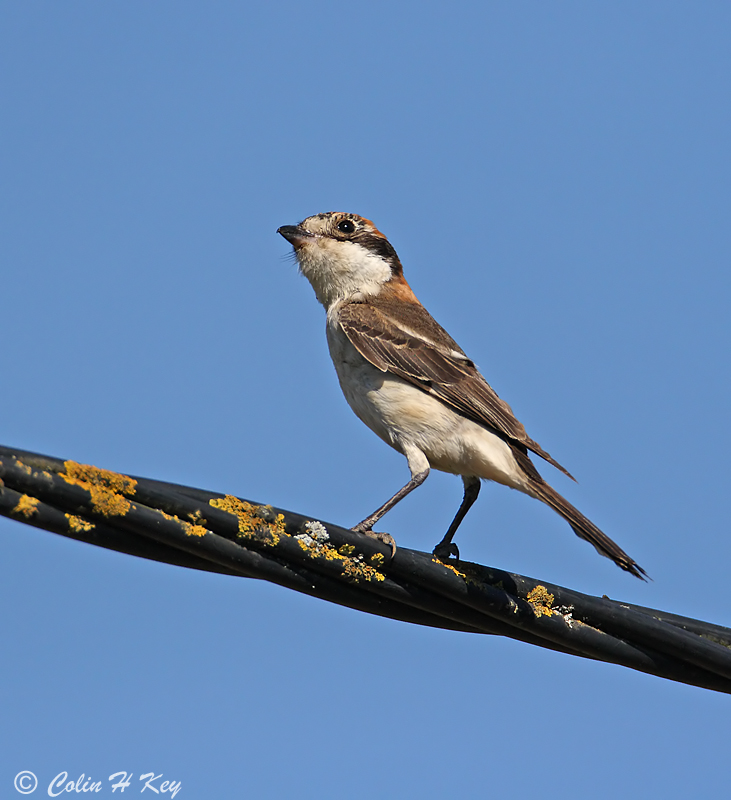
For me, the indication that "spring is here" is the arrival of the Woodchat Shrikes. I saw my first one this year on 3rd March which is a few days later than usual, and they appear to be present in lower numbers than previous years.


In previous years I have had a pair nesting in a Pomegranate hedge in my garden and one or both birds arrived on 28th February every year except in a "Leap Year" when they arrived on the 29th!!! Regrettably, they have not been here for the past two years.


This female actually perched on my shoulder for a few seconds whilst I was working in the garden  -  total magic.
One Good "Tern" Deserves Another!


The very heavy rain in the early part of this year has meant that the water coming down from the mountains via the Odeaxere and Alvor rivers has been the colour of hot-chocolate and made fishing in the Ria de Alvor very difficult for species which hunt on "sight".

An over-wintering Osprey was reduced to running around in shallow water chasing very small fish because he simply could not see his usual prey of Grey Mullet and Sea Bass.

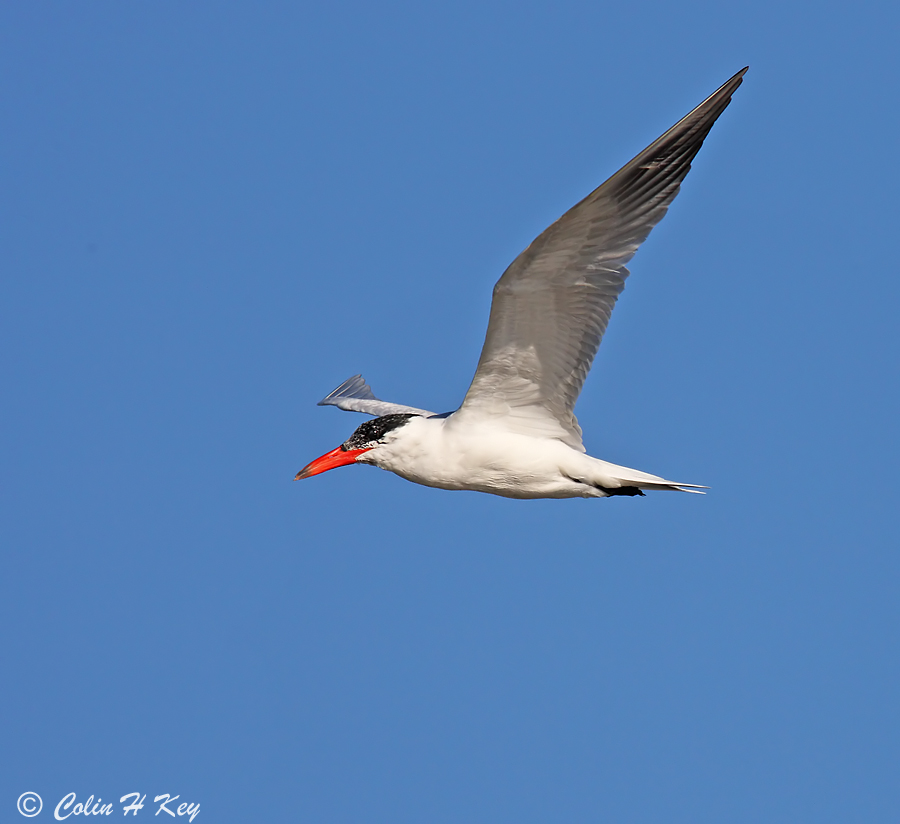
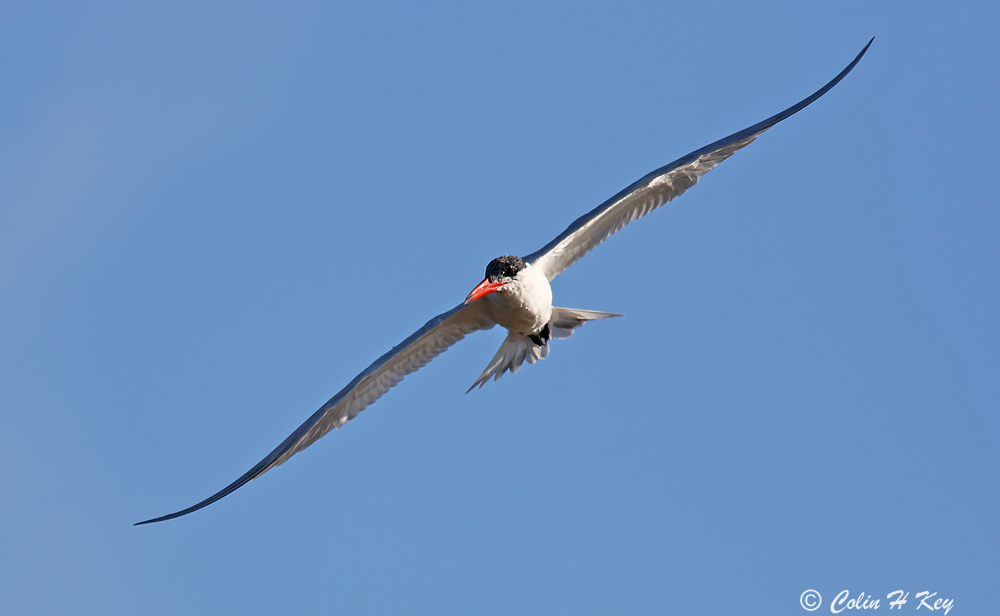
One of a dozen or so Caspian Terns was very resourceful: I saw it hovering over a group of Cormorants which were feeding communally in a loose circle and diving simultaneously to feed on their "corral" of small fish. As the water "boiled" with escaping fish the tern dived in to take advantage.


Monday, February 22, 2010

Red-rumped Swallows


Not much "birdy" news at the moment (weather in Algarve is still appalling and looking to get worse for the next ten days  -  never seen so much rain, and I come from the Lake District in Cumbria!!), except that my Red-rumped Swallows returned on Friday the 19th February (my earliest record for this species).


I do not hold out much hope for their breeding success since an army of House Sparrows have taken over every available nest site.


What happened to the Cavalry?


The guy with the red asterisk above his head (no, it is not a halo and he is certainly not Simon Templar  -  aka "The Saint") is Aidan Lonergan, formerly Regional Director of RSPB Northern Ireland (posing with a bunch of grinning colleagues who are looking very smug for probably not having achieved anything at all).

The "top brass" at RSPB are allowed what is called a "sabbatical" every now and then in which they go off and do something totally different in order to refresh the brain cells and keep them motivated  -  you and I call it a "holliday".

Aidan Lonergan (formerly involved in RSPB "Overseas Operations") decided to take his sabbatical for a month (May 2008) to visit the Algarve with the intention of  "looking" at the problems facing Lagoa dos Salgados. He had been well briefed and managed to make contact with most people involved, including myself. I, and an equally involved friend of mine, received an email from Lonergan requesting an on-site meeting at Salgados. We honestly thought it was a joke: the man cannot write English, his grammar is appalling and use of  punctuation and upper and lower case letters non-existent. He came over as an idiot, and when we met him we were not disappointed.

This is the resumé of José Tavares' (RSPB Country Programmes Officer for Portugal) report on Lonergan's visit in his official update published in September 2008 on the SPEA website:


 RSPB sabbatical

In May, Aidan Lonergan, the Director of RSPB Northern Ireland, spent one month at
Salgados as part of his RSPB sabbatical, mostly working on two issues

a) Development of a concept for the interpretation centre (target audiences, mains
messages, types of exhibits, etc). 

b) Fundraising for Salgados Meeting with several company owners and wealthy
individuals, mostly British expatriates, who are very committed to Salgados, and
discuss and implement with them fundraising plans and strategies to get some
money for SPEA to continue with this campaign.

Aidan has met several of you. He is continuing to work on the issue, has made
connections with Academics from UCC in Ireland who have agreed to provide the
data from their field visits over many years and is currently working on getting more
RSPB staff out to Salgados to help with the work. 


Aidan Lonergan stated in subsequent emails that he thought that Lagoa dos Salgados was one of the best birding sites in southern Europe and most certainly worth fighting to preserve (i.e. to try and get SPA status). He vowed to return with a "task force" in the near future to resolve the problems. I could almost hear the trumpet sounding "Boots & Saddles" and expected the cavalry to ride in in a cloud of dust to save the lagoon from all the ills of the world.


That was almost two years ago now. In the meantime Aidan Lonergan has been promoted to "Director of Futurescapes" and is now based at RSPB HQ at The Lodge at Sandy, Bedfordshire. Salgados has been forgotten.


Need I say more?

Monday, February 15, 2010

ARISE (DESPISE!) SIR GRAHAM


In November 2009 my wife and I both resigned from the  RSPB because of their total incompetence over the Lagoa dos Salgados preservation affair. We had been members for a very long time and retained our membership after moving to Portugal thirteen years ago, even though we no longer partook of any RSPB facilities. There is no doubt that the RSPB has done some sterling work in the past, and may well do so again in the future (if they can stop Boris Johnson building another London airport in the Thames estuary I will applaud them again), but these are all "big ticket" campaigns and I now feel that the RSPB is neglecting more mundane projects.

I was incandescent with rage when I learned that Graham Wynne, RSPB Chief Executive Officer since 1998, was awarded a Knighthood in this year's New Year's Honours List; had I not already resigned, I would have done so immediately.


What has this odious non-entity done to deserve this honour? The "speil" states that it is "for services to conservation"  -  my arse it is. When he came into post the RSPB was growing (as it has since its formation) and had over 1.3 million members and was boasting of achieving 1.5 million in the near future. The membership now stands at just over one million, so what the grinning Sir Graham has actually achieved is to lose a third of the membership  -   and Her Majesty gave him a knighthood for it (remember it is the ROYAL Society for the Protection of Birds). What a f*****g disgrace!!

The RSPB do nothing to earn money, they rely on membership subscriptions, special appeals and legacies (the latter has been their largest income in most years). They should be much more accountable to their members but they are not. The society is "top heavy" with Presidents, Vice Presidents, CEO, Directors, Deputy Directors, Regional Directors, etc. all concerned with preserving their posts and final-salary pensions. As someone said recently: "The RSPB and the BBC have similar problems  -  if they were run as a business, more than 50% of them would get the sack".

The writing is on the wall for them; the legions of "old dears" who had nothing better to do with their money than leave it to the RSPB in their will are quickly dying out and the current membership is rapidly jumping ship.

Do a "Google" for Graham Wynne to see what the general consensus of opinion is on this man.


Sunday, February 14, 2010

Sociable Lapwing


On 17th December I received an SMS text from Peter Dedicoat and June Taylor saying that they had found a Sociable Lapwing (Vanellus gregarious) amongst a flock of Northern Lapwing  close to the village of Benviudo, just south of the EN.123 near Mertola.


I could not go at the time (lack of urgency since the bird was not a "lifer" or even a Portuguese "tick" for me) and following this find the weather in southern Portugal has been absolute crap  -  we have now had two months of almost continuous rain.

On 28th January we had a sunny but very cold day  -  I decided to put all my gear in the Land Rover and "go for it"  -  I had not been out  birding or doing any photography for weeks. The 140 km drive was well worth it, and I was onto the bird within minutes of arriving at the location (thanks to Google Earth, SatNav and Peter's directions).


The bird was about 80 metres away down a slope feeding actively with a Norther Lapwing with which it seems to have a close affinity (some interesting speculation there!!). I positioned myself with the sun behind me and, with the rig (Canon 1DMk3 with 500mm f/4 + 1.4TC) on my lap turned off the engine and began to gently roll downhill towards the bird.


 Sociable Lapwing (Vanellus gregarious)  -  1st winter juvenile


The bird was not too bothered by my presence as I got closer, but was mostly facing away from me. I decided to play the call on my MP3 player and the bird became very interested and not only turned around but actually began walking towards me. The shots I got were at about 35 metres range, but I was confident that at this rate I was going to get some frame-filling shots at 15 metres which would produce stunning images.

I had not reckoned on the local farmer pulling up behind me in his pick-up, tooting the horn and slamming the car door  -  the birds buggered-off across the main road into a fenced field and disappeared into foot-high crops.


What was ironic is that the farmer had just come to make sure that I had actually seen "his famous bird"!!!  What I said to him was not quite what was going through my mind.


Year of the Ibis

2009 was something of an outstanding year for the ibis genus; in the U.K. and other parts of Northern Europe the Glossy Ibis was seen in unprecedented numbers and this was reflected in a marked increase in large flocks of this species in Portugal. 


Glossy Ibis (Plegadis falcinellus)


Lagoa dos Salgados had numbers in the 40+ region, trumped by 400 or so on the rice fields north of Alcantarilha. On 13th December a flock of ca. 1,200 birds was recorded at Ponte do Zambujal in Palmela, near Lisbon.

Early in 2009 a group of nine Northern Bald Ibis (Geronticus eremita) turned up at the Herdade de Salgados golf course. These birds then vanished and re-emerged at a golf course at Vilamoura, but shortly afterwards six of the birds returned to Salgados where they took up residence with a flock of Common Coot close to the club-house and first "T".


Northern Bald Ibis (Geronticus eremita)


It became apparent that these birds were not only ringed but had satellite transmitters attached (notice the patch of ruffled feathers on the 'shoulder' of the bird in the above photo), and that they had been released from the Spanish "Proyecto Eremita" reintroduction programme in Càdiz Province. The birds had been hand-reared and proved to be very approachable, if not tame  -  I have seen visitors hand feeding the birds with sandwiches and on one occasion several birds actually wandered into the reception area of the golf club-house and crapped all over the floor!

One of the six birds was found dead on the golf course and the long-staying five are now reduced to two birds. The fact that they were so tame and were fed a load of unsuitable food might have been their undoing.


Let us just hope that the two remaining birds are male and female and that they manage to strike up more than just a "friendship" (and also lose their interest in golf!!).

Lagoa dos Salgados has also hosted a Sacred Ibis (Threskiornis aethiopicus) during 2009, an un-ringed bird which might be the same as the one seen further north, but undoubtedly an "escape" from a collection.


Sacred Ibis (Threskiornis aethiopicus)


This last species, White Ibis (Eudocimus albus), conveniently hiding its ringed left leg, is courtesy of Parque Zoologica de Lagos.


White Ibis (Eudocimus alba)


Saturday, December 05, 2009

Parque Ambiental de Vilamoura


This giant reed-bed with pools and watercourses fed by the adjacent ETAR (sewage treatment works) is one of the Algarve's best-kept secrets. It is near the horrible marina town of Vilamora and next to the even more horrible golf complexes and I still managed to get lost trying to find the entrance, such is the rate at which new blocks of apartments are being built and new roads and roundabouts installed between my visits. There used to be a visitor centre at the northern end but that is now closed, but there are currently two bird-watching hides and a third elevated hide overlooking the sewage works (a magnet for gull, terns and ducks) is planned.

On 30th November I decided to have a bash at photographing the Penduline Tits which over-winter in quite large numbers (I have seen flocks of a dozen birds or more). I entered on the east side by the ETAR and immediately flushed an adult male Little Bittern and adult Squacco Heron from the old circular tank to the right of the track. A little further along this track and a juvenile Purple Heron flew out of the ditch which seperates the track from the ETAR (very late in the year for this species to be around).

Suddenly every gull and duck roosting on the treatment pools took flight, the result of a low-flying pale-phase Booted Eagle


What happened next was one of the most amazing birding sights I have witnessed: as the eagle skimmed over the top of a row of rather ugly, dense conifers which line the edge of the ETAR a flock of Black-crowned Night Herons erupted from the trees and circled above my head. I counted eleven birds, all apparently adults, and managed to get a few usable shots despite the low, bright sunlight making things rather difficult.


I did not find the Penduline Tits, and the weather rapidly deteriorated from bright, hot sunshine to grey cloud, a strong icy wind and a brief hailstorm so I departed, again pondering on just how long this wild, beautiful place can exist before it becomes engulfed by the shit which surrounds it.


Monday, November 30, 2009


Image Quality


I have just noticed that "Blogger" is seriously down-rezzing embedded images. For example, the Black-tailed Godwit image in my previous post has an "on page" (thumbnail) file size of 14.4KB, the enlarged version (after "clicking" on image) is 58.27KB, but the image linked to on my PBase website is actually 329.38KB. This means that even the enlarged image on "Blogspot" is a load of crap!! Why are they so mean with storage space?

To view the PBase image look here:

http://www.pbase.com/accentor/image/79729910/original.jpg

*Click on headless image for full-size photo


Sunday, November 29, 2009

SERENE REFLECTION


Black-tailed Godwit (Limosa limosa) at the Salinas da Tavira ("salt pans") - one of my favourite birds in a most tranquil setting.

Saturday, November 28, 2009


White-rumped Sandpiper


Yet another "Yank" (vagrant bird from America) has turned up in the Algarve; on 22nd November Simon Wates and the "Tavira Gang" (Peter Dedicoat, June Taylor and Ray Tipper) found a White-rumped Sandpiper (Calidris fuscicollis) - its Portuguese name is "Pilrito-de-uroprígio-branco" - at a small inlet near the beach at Martinhal, Sagres.


I went the following day (after Peter kindly phoned me to let me know about the bird) and found the bird straight away (it was the only bird there to begin with) and managed to get 200+ photographs. Unfortunately the light was very harsh and the bird was feeding actively and for most of the time faced away from me.


Unfortunately three Common Sandpipers (Actitis hypoleucos), a resident breeding species in the Algarve, turned up and one took exception to the presence of the American bird and began attacking it quite aggressively:


*Postscript: Like all Calidris waders, this small bird breeds in the northern hemisphere (often within the Arctic Circle) and then migrates south for the winter, often into the southern hemisphere (although some will linger in the southern regions of the northern hemisphere if weather conditions are not too harsh). This bird would normally winter in South America but has been blown off-course and carried across the Atlantic by severe westerly winds and cyclonic conditions. That is an amazing journey (more so when you consider that the plumage of this bird shows that it is a juvenile 1st winter bird born this summer) - what is even more amazing is that another bird of the same species turned up at the same locality on the 26th November, making these only the 7th and 8th records for this species in mainland Portugal; there are better 'odds' of winning the lottery than this happening!

Wednesday, November 11, 2009

The Salgados Fiasco

Where do I start with this? I could write an entire book, but am tempted to write nothing at all - perhaps a few poignant words are in order.

It is now almost seven years since Derek Honnor, Michael Benington and myself began the campaign to save Lagoa dos Salgados (“Pêra Marsh”) when we realised the threat it was under. Derek actually visited The Lodge at Sandy, Bedfordshire (RSPB HQ) and did a bit of “table banging”, after which their International Division became involved and José Tavares (RSPB Country Programmes Officer for Portugal, Greece and Turkey) began to liaise with SPEA, “Sociedade Portuguesa para o Estudo das Aves”, the Portuguese “Birdlife” partner.


Hunting dogs on the loose just after the lagoon was drained


View of the drained lagoon from the "Eco-Via"


There were moments of optimism a few years ago when “Finalgarve” (the company who are due to develop a new golf academy and a large amount of residential property on the western side of the lagoon) announced that they would pull back their development from the very edge of lagoon (I believe that their initial intention was to drain it completely), retain the wetland as a part of their development (in much the same way as the lagoon at Qta do Lago is an integral part of the São Laurenço golf complex), and they even offered the ruined farm buildings at the NE corner of the lagoon as a potential “Visitor/Interpretation Centre” (for which the RSPB actually commissioned architectural plans).

This is now all history and with so many different “parties” involved nothing, as is usual in Portugal, has been achieved. This year has been the worst for breeding birds at Salgados, mainly due to the frequent draining of the lagoon in the spring by Herdade de Salgados Golfe. The installation of the “Ecovia” (the walkway - cycle track funded by the E.U. and planned to run from Vila Real on the Spanish border to Cabo de São Vicente) has brought in a mass of undesirable tourists and dog walkers from the eastern side, and other human disturbance has been jet skiers, para-planers, quad bikers and horse riders in addition to the usual “Sunday afternoon riff-raff”.
A fund-raising charity to specifically pay for a controlled outflow sluice which would negate the “all or nothing” method of draining the lagoon has failed miserably, despite accumulating more than the target figure - the money, collected by the “Just Giving” organisation over twelve months ago has still not been passed on to the RSPB. The whole business has degenerated into a circus and shown all the parties involved to be totally incompetent at planning, implementing and completing a business proposition.

In short, they are totally f*****g useless at what they are supposed to be doing. As a result I have cancelled my long-standing membership of RSPB and will take no further part in supporting or campaigning for the preservation of Lagoa dos Salgados. The RSPB should be deeply ashamed of their dilatory performance in this matter.


Three views of how the "lagoon" looks now (Nov 2009)


It has taken almost seven years for this bunch of incompetents to achieve absolutely nothing - this superb birding locality is now worse-off, and in greater danger from human disturbance, than it was when the campaign to save it began.

Thursday, November 05, 2009

Lunch with the Bustards

I spent a couple of hours at Cabranoso, the raptor watch-point near Sagres, one morning hoping to see hundreds if not thousands of birds - nothing. Despite perfect conditions and a northerly breeze the birds were just not coming through. So, I decided to "trawl" around the tracks near Vale Santo in search of Dotterel and Red-throated Pipit which had been recently reported. I was slowly edging my way along dirt tracks which no other vehicle than my Land Rover Defender would be able to cope with, with my 1DMk3 and 500mm lens cradled on my lap. Not much doing so I stopped to have my lunch (cheese butty with crisps and a banana and apple) and just reveled in the warmth of the autumn sunshine and the spectacular scenery of this beautiful but harsh landscape. Something moving amidst the low vegetation caught my eye - a Little Bustard, about 50 metres away.


Then more, and more - I counted twenty birds on the ground.
The light was harsh and rather against me so I started up the Land Rover and in ultra-low gear slowly crept around this grazing flock. I took many shots with the lens resting on the lowered window, but had to keep turning the engine off (the vibration causes a lot of blur). I tried to get closer, starting the engine and inching further forward, but they knew I was there and for every metre I gained the birds slowly idled a similar distance away. In the end I pressed it too much and they took flight - I counted 28 birds in total which I believe is a record for a single flock here. A magnificent sight.


Wednesday, November 04, 2009

"BODI"


My beloved dog Bodi has just turned twelve years old. She, and her sister, were rescued by a friend of mine from the beach at Alvor; we later discovered that their mother was a fisherman's dog which had had a litter of seven, five dogs and two bitches. The two female pups were abandoned because these ignorant peasants do not want any more females producing litters and refuse to pay to have them spayed. The Algarve is full of abandoned dogs - it is a disgrace and very distressing.

However, Bodi has had a good home for the past twelve years and is not doing badly for her age; she has arthritis in her front paws (as do I) and also a touch of spinal spondylosis. She has a fair bit of Border Collie in her genes which makes her intelligent, athletic and very obedient to her master. She has the best personality of any dog I have ever known.

As a youngster she would take me out for my morning walk at the crack of dawn (8 kms), and then again in the afternoon for a more leisurely stroll around the "Ria". In between she would also have a shorter "pee-wee" walk at midday and then again just before bedtime - goodness only knows how many kilometres we have walked together.

I love her dearly, and dread the day when she is not with me - she is the second greatest love in my life.